I've watched countless dog owners stand at their front doors, frantically searching for a missing boot after a simple walk around the block. It's maddening—you spend money on protective gear, only to have your pup shake it off halfway down the street. Traditional dog boots fall off constantly, leaving pet parents frustrated and their dogs' paws exposed to mud, salt, and harsh chemicals.
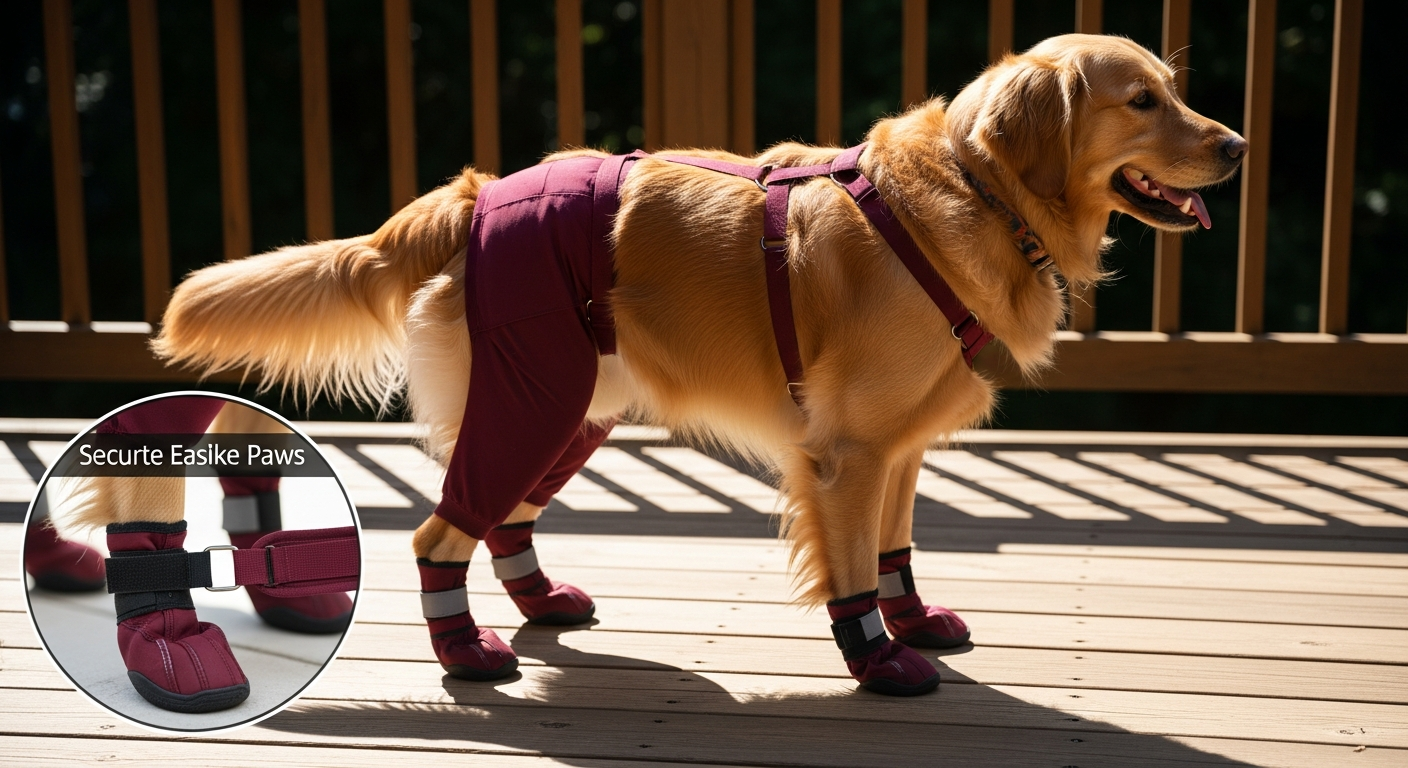
Enter Walkee Paws Deluxe Easy-On Dog Boot Leggings, a revolutionary approach to canine paw protection that's earned the reputation of being the world's first dog leggings. Rather than relying on individual boots that slip and slide, this integrated system combines waterproof boots with water-resistant leggings connected by an adjustable suspender system. The design has resonated so strongly with pet owners that it even caught the attention of Shark Tank investors—and for good reason.
In this guide, you'll find everything needed to determine whether these leggings are the right fit for your dog. We'll examine the standout features that make them different from traditional booties, break down sizing and fitting challenges, explore which dogs benefit most, and help you decide if the $25-$50 investment makes sense for your household.
Why Traditional Dog Boots Keep Failing Your Dog
The fundamental design flaw of individual booties is straightforward: they simply don't stay secured to your dog's paws. Without any anchor point to the body, each boot functions independently, vulnerable to every shake, jump, and tug. Dogs have spent thousands of years perfecting the art of getting things off their feet—it's instinctive. A single loose boot creates a domino effect where one missing boot makes the others feel unbalanced, prompting your dog to kick them off one by one until nothing remains but frustration.
This frustration cycle becomes costly. You purchase boots, lose them within weeks, and start over again. Multiply this across an entire winter season, and the "budget-friendly" individual boot approach suddenly looks expensive. Pet owners expecting boots to stay on throughout muddy trail adventures or snowy yard sessions find themselves constantly adjusting, repositioning, or accepting defeat.
Real-world scenarios expose these limitations quickly. That muddy trail hike? You'll be chasing boots. A snowy yard romp? Count on losing at least one. Wet pavement during a downtown walk? The slick surface practically guarantees a boot will slip off. Dogs naturally shake off boots that don't feel secure because the design simply doesn't account for how canine bodies actually move and interact with their environment.
The gap between what pet owners expect and what single-boot solutions deliver grows wider with each failed walk. Your dog needs protection, but they need it in a way that stays put.
The Integrated System: How Walkee Paws Leggings Stay Put
The suspender system design fundamentally changes the equation. By anchoring the protection to the dog's back via an adjustable suspender harness, Walkee Paws distributes weight across the entire body rather than concentrating it on individual paws. This architectural approach eliminates the primary reason boots fail: they're now part of an integrated system that moves with your dog instead of fighting against their natural motion.
The connected boot-and-legging design extends protection up the legs, creating a unified garment rather than four separate pieces your dog can shed. When your dog shakes or moves, everything moves together. The boots stay where they belong because they're attached to leggings that are secured to the body. This simple innovation solves the most persistent problem in dog boot history.
The four-way stretch fabric adapts to different body shapes and sizes, preventing the bunching and binding that makes traditional boots uncomfortable. Your dog won't feel like they're wearing something foreign—they'll feel supported and protected. The adjustable Velcro chest strap maintains secure positioning without bulky straps or buckles that dig into skin.
Compared to individual boots, Walkee Paws demonstrate dramatically superior staying power. Pet owners report actual protection that persists through entire walks instead of falling off within minutes. Other protective gear options, like raincoats or paw balms, simply don't provide the comprehensive coverage or reliability that this integrated system delivers.
Real user experiences consistently highlight the reliability factor. Dog owners who've transitioned from individual boots share stories of finally enjoying walks without the constant anxiety of losing gear. The difference is stark enough that many describe it as transformative.
Material Matters: TPE Boots and Stretch Fabric Technology
TPE (thermoplastic elastomer) represents a significant advancement over traditional rubber boots. This material is non-toxic, stretchy, and flexible, offering superior comfort and fit. Dogs spend time mouthing and chewing their gear—especially puppies—and TPE's safety profile matters. Traditional rubber becomes brittle and crracks in cold weather; TPE remains pliable and functional across extreme temperature ranges from -40°F to 302°F.
Temperature resilience distinguishes Walkee Paws from standard boots. Winter walks in harsh climates demand materials that don't harden and lose flexibility in sub-zero conditions. Summer urban walks require boots that won't soften and degrade on hot pavement. TPE handles both extremes without compromising structural integrity or comfort.
The flexibility advantage extends to extended wear periods. Dogs wearing Walkee Paws experience less strain and irritation because the material flexes naturally with their paw movements. Traditional rigid rubber boots create pressure points and restrict motion; TPE accommodates individual paw shapes and movement patterns.
Four-way stretch legging fabric prevents chafing and irritation where the fabric meets your dog's skin. The material moves independently from the legs rather than bunching or creating friction during activity. Durability expectations remain strong across multiple seasons of regular use, with many owners reporting years of reliable protection from a single pair.
Protection Across All Weather and Surface Conditions
Waterproof boot specifications combined with water-resistant legging coverage provide comprehensive leg protection that single-boot systems cannot match. Your dog's entire lower leg stays dry rather than just the paw area, eliminating the gap where water seeps in and undermines protection.
Defense against snow and rain extends protection beyond simple moisture barriers. Salt and snow-melt chemicals accumulate on paws during winter walks, burning sensitive skin and causing long-term damage. Traditional boots leave gaps where chemicals penetrate; Walkee Paws' integrated design seals these vulnerabilities. The leggings extend protection up the leg, preventing chemical residue from accumulating on fur and being tracked indoors.
Hot pavement protection matters significantly during summer months, especially in urban environments where asphalt heats to dangerous temperatures. Dogs' paw pads are sensitive and susceptible to burns from scorching surfaces. Walkee Paws provide a thermal barrier that allows your dog to enjoy summer walks safely.
Long-haired breeds experience a specific problem that most pet owners don't anticipate: snowball formation. Snow clings to leg fur, creating ice balls that tangle, mat, and cause discomfort. Walkee Paws' leggings prevent this entirely by covering the vulnerable fur areas. For fluffy dogs, this single benefit often justifies the entire investment.
Mud containment benefits extend beyond cleanliness. Muddy paws tracked indoors create ongoing cleanup demands—vacuuming daily, wiping paws constantly, laundering blankets frequently. Walkee Paws reduce post-walk cleanup time dramatically, saving hours weekly for active dog owners who walk regardless of weather.
Protection from allergens and irritants found on outdoor surfaces addresses health concerns that often go unspoken. Some dogs develop sensitivities to specific plants, pollens, or chemicals encountered on regular walks. Comprehensive paw and leg protection can reduce allergic reactions and skin irritation.
The Easy-On Design: Putting Them On and Taking Them Off
The sling-style paw insertion method proves faster than wrestling with individual boots. Your dog steps into the leggings like stepping into pants, and the boots slide on seamlessly. First-time users find the process intuitive after one or two applications—far simpler than holding a struggling dog still while forcing a boot onto each paw.
Step-by-step application begins with positioning the leggings at ground level. Your dog steps forward, inserting each paw into the corresponding boot. Once all paws are in place, you slide the leggings up the legs and secure the chest strap. The entire process takes seconds once you understand the mechanics.
The adjustable fit mechanism allows customization for your dog's specific measurements. Unlike fixed-size boots that don't account for individual variation, Walkee Paws adapt to your dog's body. The suspender system adjusts, and the Velcro chest strap tightens or loosens based on your dog's particular frame.
Removal techniques don't stress or frustrate your pet. Simply unfasten the chest strap and slide the leggings down. Your dog's paws come out as easily as they went in. There's no tugging, no forcing, no wrestling—just smooth removal that respects your dog's comfort.
Time savings compared to traditional booties accumulate significantly. If you walk your dog twice daily and spend five minutes struggling with individual boots each time, you're investing nearly an hour weekly in boot management. Walkee Paws cut this time dramatically, freeing those minutes for actually enjoying your walk.
Accessibility considerations matter for older dogs or those with mobility issues. Senior dogs often struggle with standing still while you fiddle with their boots. The quick application method of Walkee Paws reduces the physical demand on older joints, allowing them to remain protected without added stress.
Getting dogs acclimated to wearing the leggings requires patience but typically progresses quickly. Most dogs adjust within a few days once they realize the leggings don't restrict movement or cause discomfort. The key is introducing them gradually, starting with short indoor wearing periods before outdoor use.
Sizing and Fitting: Where Most Pet Owners Struggle
Accurately measuring your dog for the correct size represents the most critical step in the process. You need chest measurements, leg length, and paw width—not estimates or guesses. Many pet owners measure incorrectly by not accounting for the dog's actual body dimensions versus their perceived size.
Common sizing mistakes emerge when people choose based on their dog's weight rather than body measurements. A dog might weigh within a size range but fall outside the actual dimensional specifications. The "between sizes" dilemma creates legitimate fitting problems, as choosing wrong results in leggings that slip, bunch, or restrict movement.
The importance of chest measurement and suspender adjustment cannot be overstated. The chest strap anchors the entire system. If this measurement is wrong, the leggings won't sit properly regardless of leg-length accuracy. Proper suspender adjustment determines whether the system functions as designed or fails like individual boots.
Breed-specific fitting challenges affect short-legged versus tall breeds differently. Dachshunds and Corgis require careful attention to leg-length proportions. Conversely, tall breeds like Greyhounds need leggings that accommodate their extended leg length. The product line offers variety, but finding the right option for unusual body types sometimes requires communicating directly with the brand.
Improper sizing can lead to slipping even with the suspender system in place. A chest that's too loose makes the entire system ride backward; a chest that's too tight restricts breathing and movement. Too-long leggings bunch at the ankles; too-short leggings don't protect adequately.
Return policy considerations matter because initial sizing rarely works perfectly on first try. Understanding what to expect if the first size doesn't work helps you approach the purchase with realistic expectations. Many retailers offer exchanges, though some frustration around return procedures has been reported.
Resources for getting fitting assistance before purchasing exist on the brand's website and through customer service channels. Taking time to communicate dimensions and ask questions before purchasing prevents most sizing disasters.
Which Dogs Thrive in Walkee Paws Leggings
Long-haired breeds experience the most dramatic benefits. Fluffy dogs prone to snowball formation and muddy paw accumulation find relief in protective coverage that prevents matting and tangling. The snowball prevention advantage alone transforms winter walks for breeds like Golden Retrievers, Collies, and Newfoundlands.
Dogs with sensitive paws or allergies to outdoor irritants thrive in the protected environment Walkee Paws provide. If your dog develops itchy paws after walks or shows signs of contact dermatitis from environmental exposure, comprehensive paw protection can eliminate these reactions entirely.
Active dogs who spend significant time outdoors in variable weather represent the core demographic. Dogs who accompany their owners on multiple daily walks, hiking adventures, and outdoor activities benefit most from protection that actually stays in place and handles all conditions.
Senior dogs benefit from extra support and easier dressing methods. Older joints appreciate not standing on cold pavement while you struggle with boots. The quick application means less disruption to their day while ensuring they remain protected.
Dogs with anxiety around traditional boot fittings often respond well to Walkee Paws' gentler approach. The absence of fiddling and struggling sometimes reduces anxiety that develops around boot management.
Small to medium-sized breeds have the widest product line options, making sizing easier and fit more likely to succeed. Very small breeds (under 5 pounds) and very large breeds (over 100 pounds) sometimes find limited size options.
Dogs whose owners prioritize cleanliness and reduced indoor mud tracking represent another core user group. If you're tired of muddy prints across your floors and constant paw-wiping at the door, Walkee Paws prevent most of this mess before it starts.
The Investment Factor: Price, Durability, and Long-Term Value
The price range of $25-$50 reflects variations based on size and specific style. Smaller dogs typically fall at the lower end; larger dogs at the higher end. Some seasonal colors or special editions may carry slight premium pricing.
Cost comparison becomes illuminating when you factor in boot replacement frequency. If you lose one boot every two weeks throughout fall and winter (a realistic scenario for many dog owners), you're replacing boots constantly. Five replacements at $15-20 per pair already exceed the Walkee Paws investment. Multiply this across multiple seasons, and the integrated system becomes economically superior.
Durability expectations suggest a pair lasts two to three seasons with regular use and proper care. Some owners report five years of reliable protection from a single pair, though this assumes moderate-climate usage and careful maintenance. The materials hold up remarkably well when treated respectfully.
Machine-washable convenience represents an underrated value factor. You simply toss them in the wash after muddy walks, eliminating the manual scrubbing required for individual boots. This convenience factor alone saves time weekly.
Replacement part availability varies. While full replacement pairs are standard, finding specific components like individual laces or elastic sections is sometimes challenging. Most wear occurs at pressure points where users can continue using the leggings even as minor components age.
Seasonal usage patterns affect the value proposition. Year-round outdoor dogs in harsh climates justify the investment immediately. Dogs used only during winter months take longer to reach positive ROI, though the protection and convenience benefits accrue regardless.
Return on investment calculations for frequent outdoor dog owners typically show positive results within the first season. Once you've avoided replacing lost boots five or six times, you've recouped the Walkee Paws cost and entered pure savings territory.
Honest Pros and Cons: What Users Really Experience
The advantages are substantial and well-documented. Superior boot retention stands foremost—your dog's protection stays in place. Walkee Paws keep paws and legs clean and dry through all weather conditions. Post-walk cleanup time drops dramatically, saving hours weekly. The comfortable fit allows extended wearing without irritation. Easy on/off application means no wrestling or struggle. Machine-washable convenience eliminates laborious manual cleaning. Comprehensive environmental protection addresses snow, salt, chemicals, hot pavement, and allergens. Shark Tank validation provides confidence in a product that's captured mainstream attention.
The drawbacks deserve equal consideration. Initial sizing can be trial-and-error, requiring careful measurement and sometimes exchanges. Some dogs resist initially, though most adapt quickly. Imperfect fit can cause slipping despite the suspender system—proper sizing matters tremendously. Return policy frustrations have been reported by some users, though experiences vary. Limited size range for very small or large breeds creates fitting challenges for outliers. The upfront cost stings despite long-term value. Full effectiveness requires proper fit, meaning you can't succeed without getting the sizing right.
Balancing these factors depends on your specific situation. If you have an active dog in a harsh climate with sizing that fits the available options, the pros overwhelmingly outweigh the cons. If you have an unusual breed size or a dog prone to anxiety, the cons require more serious consideration.
Real-World Scenarios: When Walkee Paws Make the Biggest Difference
Winter in cold climates with snow, ice, and chemical salt represents the classic use case. Your dog walks through salt-treated streets and sidewalks multiple times daily. Traditional boots fall off within blocks, leaving paws exposed. Walkee Paws keep protection in place throughout the entire walk while preventing salt accumulation on fur.
Urban environments with hot pavement and city grime benefit significantly. Summer concrete walks that burn paw pads become safer and more comfortable. Downtown walks through dirty streets no longer mean tracking contaminants indoors.
Homes with long-haired dogs prone to muddy paw prints and snow accumulation find transformative value. The snowball prevention alone justifies the investment if you've struggled with daily matting and tangling.
Multi-dog households where boot loss compounds the problem find exponential benefit. Losing one boot from one dog is frustrating. Losing multiple boots from multiple dogs across a winter season becomes expensive and exhausting. Walkee Paws eliminate this problem system-wide.
Dogs with outdoor allergies or sensitive skin conditions thrive with comprehensive protective coverage. If your dog develops itchy paws after every walk, removing environmental exposure through protection addresses the root problem.
Active families who walk daily regardless of weather maximize the value proposition. Your dog needs reliable protection every single day, not just occasionally. Walkee Paws deliver that consistency.
Pet owners with limited time for post-walk cleanup routines benefit from the reduced mess significantly. If you're already stretched thin, eliminating muddy-paw management frees up precious minutes.
Dogs with mobility issues who need extra support and protection during outdoor time find that Walkee Paws provide psychological comfort and physical safety simultaneously.
Getting the Fit Right: A Practical Sizing Guide
Measuring your dog's chest, leg length, and paw width accurately sets the foundation for success. Use a soft measuring tape, measure your dog in their normal standing position, and record measurements to the nearest half-inch. Chest measurement should be taken behind the front legs where the suspenders will sit.
Using the brand's sizing chart effectively requires matching all three measurements, not just one. If your dog is between sizes in any measurement, compare actual product dimensions to understand which size accommodates them best. Sometimes a size up in chest accommodates better leg length; sometimes a size down works if chest is the priority.
Understanding the suspender adjustment range and limitations helps you choose the right size. Most Walkee Paws adjust a few inches in either direction, but they can't compensate for a fundamentally wrong chest size. If you're between sizes for chest measurement, choose based on actual body dimensions rather than hoping to adjust around it.
Trying on techniques before committing to purchase help when possible. Some retailers allow returns, making it acceptable to order, try fit on your dog, and exchange if needed. If you're purchasing online without return options, extra care in measurement pays dividends.
The "between sizes" dilemma requires realistic decision-making. If your dog measures halfway between two sizes, you'll need to choose based on which measurement matters most. An oversized chest that's too loose is worse than slightly short legs; prioritize accordingly.
Assessing fit once they arrive requires moving your dog around in them. Watch for bunching at the ankles, restriction at the chest, or excessive looseness anywhere. Proper fit looks balanced across the legs with no sagging or binding.
Adjustment strategies if initial fit isn't perfect include tightening or loosening the chest strap to its fullest range. Sometimes this single adjustment transforms a questionable fit into a workable one. If adjustment doesn't solve the problem, exchange is the appropriate path forward.
When to exchange versus attempting to make a size work requires honest assessment. If the leggings restrict your dog's movement, exchange immediately. If they're slightly loose but not slipping, continued adjustment or an extra wash cycle that shrinks them slightly might resolve it.
Acclimation Strategies for Dogs Resistant to Wearing Leggings
Why some dogs resist and how to interpret their behavior reveals important information. Some dogs simply dislike the sensation of anything on their legs and need time to adjust. Others have genuine discomfort from poor fit or sizing. Distinguishing between the two guides your response.
Gradual introduction techniques and desensitization timelines work for most dogs. Start by having your dog wear the leggings indoors for five minutes while you're present and positive. Gradually extend wearing time before attempting outdoor use. Most dogs adjust significantly within one week of consistent exposure.
Positive reinforcement methods and reward-based training accelerate adjustment. Every time your dog tolerates wearing the leggings, immediately reward with treats, praise, or play. Your dog learns that wearing them predicts positive outcomes.
Short wearing periods to build tolerance before outdoor use prevent overwhelming your dog. A walk around the block in leggings represents manageable exposure. A long hike in unfamiliar gear overwhelms most initially-resistant dogs.
Identifying genuine discomfort versus normal adjustment resistance requires observation. A dog resisting while walking but comfortable sitting probably needs more adjustment time. A dog limping or showing pain signals fit problems that need addressing immediately.
Alternative solutions exist if your dog genuinely won't tolerate leggings despite good-faith efforts. Paw balms, boots in milder conditions, or simply accepting muddy paws represent valid alternatives. Forcing unwilling dogs into protective gear damages their trust and creates lasting anxiety.
Success stories from owners who overcame initial resistance demonstrate that patience pays dividends. Many dogs that initially resisted now seem to expect their leggings and actually stand ready for walks in protective gear.
Maintenance and Care: Keeping Your Leggings in Top Condition
Machine-washing instructions typically recommend cold water and gentle cycles to preserve material integrity. Check the specific product tag, as some variations might require different temperature settings.
Drying methods matter significantly. Air-drying is safest, preventing material degradation from heat. Tumble drying on low temperature works but risks premature wear. Hang-drying or lay-flat drying extends lifespan considerably.
Spot-cleaning for minor dirt between full washes maintains freshness without unnecessary washing. A quick rinse with a hose after walks removes caked mud before it dries and sets.
Storage considerations during off-season months involve keeping them clean and dry in a cool location. Avoid storing wet or damp leggings, as mold and mildew can develop. A closet or storage bin works well.
Inspecting for wear and tear before each use catches developing problems early. Check the suspender attachment points, boot seams, and elastic areas for degradation. Early intervention prevents complete failure mid-walk.
Addressing odor issues and maintaining freshness sometimes requires special laundry treatment. If your leggings develop musty odors, adding vinegar to the wash cycle or soaking before washing eliminates stubborn smells.
Extending lifespan through proper care and maintenance consistently shows differences between well-cared-for and poorly-maintained pairs. Leggings treated gently last significantly longer than those subjected to rough handling and improper storage.
Alternatives and Comparisons: How Walkee Paws Stack Up
Individual waterproof dog boots represent the traditional approach with well-documented limitations. While less expensive individually, their falling-off nature makes them ultimately more expensive through constant replacement. Their single-point design leaves gaps in protection.
Dog raincoats address full-body protection but typically don't cover paws adequately. A raincoat keeps the back and sides dry but leaves vulnerable paws exposed to ground-level hazards. Combining raincoats with paw protection requires additional gear.
Paw wax and balms serve supplementary roles effectively but don't provide comprehensive waterproofing. They protect against chemical exposure and offer some abrasion resistance but fail in wet conditions. They complement rather than replace protective gear.
Sock-style booties offer more moderate durability than traditional hard boots. Their fabric construction sometimes provides slightly better comfort, but they suffer from identical fit and staying-power problems as traditional boots. They still fall off constantly.
DIY solutions built from socks, tape, or improvised materials typically underperform. They lack the engineering of purpose-designed protection and often create fit problems or restrict movement.
Other integrated boot-and-legging systems exist in the market but represent relatively new entries without Walkee Paws' proven track record. Walkee Paws' years of customer feedback and optimization provide confidence that this approach works better than newer competitors.
Price-to-performance comparison across all options reveals Walkee Paws' strong value proposition. Year-round protection from a single $40 pair outperforms repeatedly purchasing $20 boots that disappear monthly.
The Shark Tank Effect: How Validation Changed the Market
The Shark Tank appearance represented a pivotal moment for the brand. Investor interest from notable figures provided third-party validation that the product concept genuinely solved a real problem worth commercial backing.
How media attention elevated brand credibility and trust cannot be understated. Consumer perception shifts dramatically when a product catches mainstream attention and receives investor backing. The Shark Tank platform reached millions of viewers, introducing the product to pet owners who'd never encountered it otherwise.
Market impact following the show's success proved substantial. Product availability expanded, distribution channels multiplied, and brand recognition accelerated significantly. The episode generated momentum that transformed Walkee Paws from a specialized product into something approaching mainstream acceptance.
Quality improvements and innovations since the Shark Tank episode suggest the company continues refining their offering. Investor backing provided resources for ongoing development and customer service enhancement.
Customer confidence boost from celebrity investor backing translates to willingness to try the product. Consumers trust that professional investors vetted the company's business model and product quality before committing capital.
Availability expansion following the show's success means you can now find Walkee Paws through multiple retailers rather than only direct-from-brand purchasing. This accessibility has democratized access to the product.
Reputation building through mainstream media exposure created lasting brand recognition that persists years after the original episode aired. Walkee Paws remains top-of-mind when dog owners search for protective solutions.
Beyond the Hype: Is This Investment Right for Your Dog?
Your dog's paws deserve protection that actually stays in place—and that's precisely where Walkee Paws Deluxe Easy-On Dog Boot Leggings deliver. The integrated design genuinely solves the most frustrating problem pet owners face: boots that vanish mid-walk. Whether you're battling winter salt, muddy trails, or hot summer pavement, these leggings provide comprehensive coverage that traditional booties simply can't match.
The $25-$50 investment stings initially, but when you factor in the cost of repeatedly replacing lost individual boots, the math shifts dramatically. Add in the time savings, reduced cleanup hassles, and genuine protection for your dog's health, and the value becomes undeniable. Yes, sizing requires attention, and some dogs need time to adjust—but thousands of satisfied owners have already made the leap.
Your next step? Measure your dog carefully, check the sizing chart twice, and commit to the acclimation process if needed. The Walkee Paws community has proven that this product works when fitted correctly. If muddy paws and lost boots have been your constant struggle, it's time to experience the difference that actually staying-on protection can make.
Leave a Reply