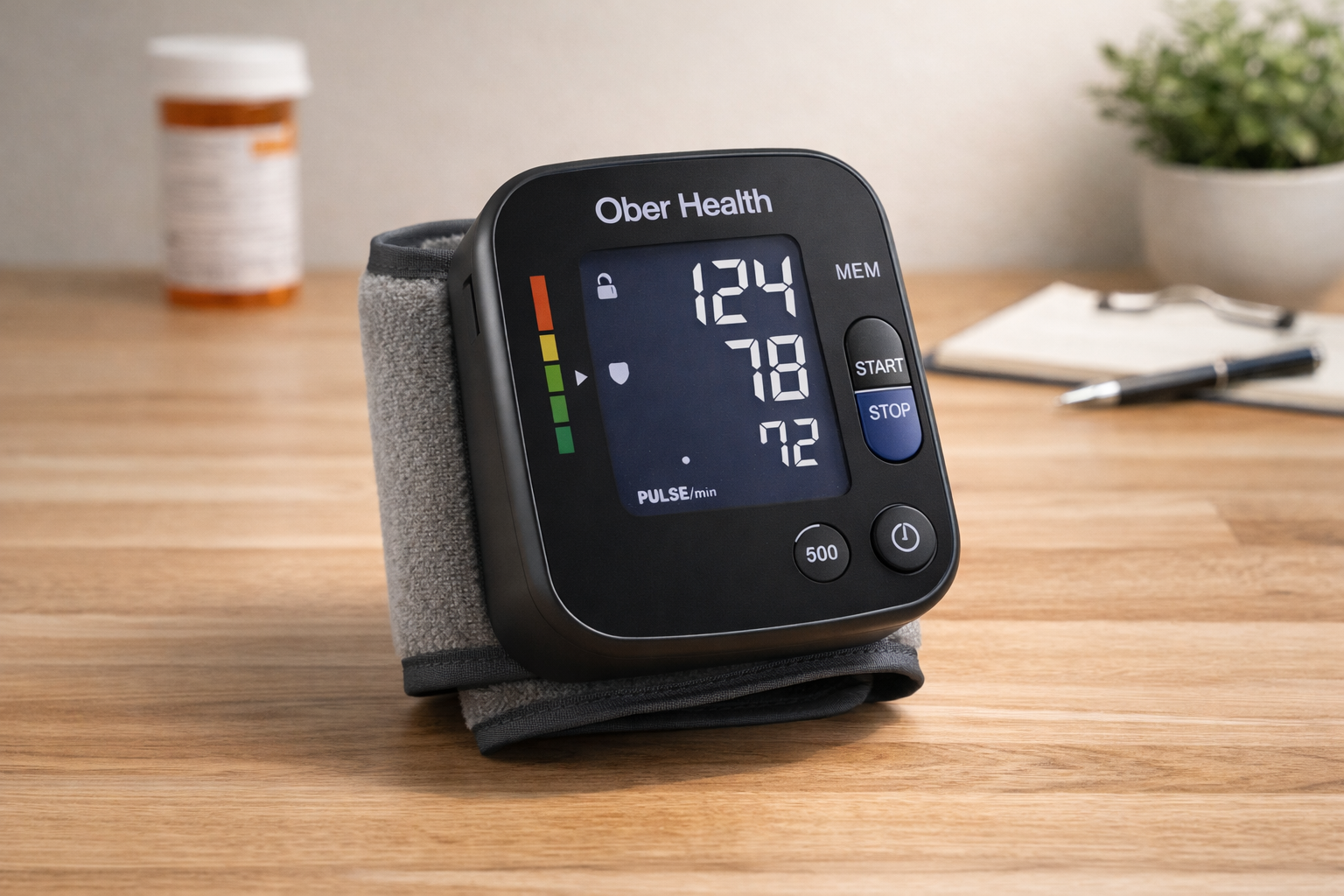
Keeping an eye on your blood pressure used to require clinic visits, long waits, and bulky medical equipment. Today, compact home devices make monitoring far simpler.
One option gaining attention is the Ober Health Blood Pressure Monitor Wrist Cuff, a lightweight digital monitor designed for fast readings at home, at work, or while traveling.
If you manage hypertension, track heart health, or simply want regular readings, a reliable home monitor helps you stay informed.
According to the American Heart Association, nearly half of adults in the United States have high blood pressure, which makes consistent monitoring extremely important for early detection and long-term health management.
This compact wrist device focuses on convenience while still delivering clear measurements for systolic pressure, diastolic pressure, and pulse rate. Its portable design allows quick checks without complicated setup.
Ober Health Blood Pressure Monitor Wrist Cuff: Features, Price, and Performance
The Ober Health Blood Pressure Monitor Wrist Cuff is a digital wrist-style monitor built for quick and convenient blood pressure tracking. Instead of a traditional upper-arm cuff, this model wraps comfortably around the wrist and delivers results within seconds.
Official Pricing
- Regular price: $54.99
- Current sale price: $39.99
- Occasional promotional price: $29.99–$34.99
Within the home health monitor market, wrist monitors typically range from $35 to $80, placing this device in the budget-to-mid price category.
Key highlights
- Fully automatic blood pressure measurement
- One-button operation
- Large LCD display with clear numbers
- Voice broadcast of results
- Dual user memory with up to 99 readings per user
- Irregular heartbeat detection
- Compact and travel-friendly design
For users seeking quick readings without complicated settings, this model focuses on simplicity and portability.
How a Wrist Blood Pressure Monitor Works
Most digital wrist monitors use oscillometric technology. This method measures changes in blood flow through the artery while the cuff inflates and deflates.
The device detects these changes and calculates:
- Systolic pressure – pressure when the heart pump
- Diastolic pressure – pressure between heartbeats
- Pulse rate
Medical journals such as Hypertension Research note that oscillometric monitors are widely used in home devices due to their convenience and ease of automation.
For accurate readings, wrist monitors must remain at heart level during measurement. Incorrect positioning can slightly affect results.
Key Specifications and Measurement Accuracy
Understanding the technical details helps you evaluate performance.
| Feature | Specification |
| Measurement Method | Oscillometric |
| Systolic Range | 60–260 mmHg |
| Diastolic Range | 40–199 mmHg |
| Pulse Range | 40–180 bpm |
| Accuracy | ±3 mmHg (pressure), ±5% (pulse) |
| Memory Storage | 2 users, 99 readings each |
| Weight | ~115 g (0.25 lb) |
| Power Source | 2 AAA batteries |
These specifications fall within common ranges for home blood pressure monitors.
Why You May Prefer a Wrist Blood Pressure Monitor
Traditional upper-arm monitors remain the clinical standard, yet many users prefer wrist devices for convenience.
Advantages
- Smaller and easier to carry
- Faster setup for daily readings
- Comfortable cuff design
- Good option for travel
Limitations
- Wrist position must stay at heart level
- Incorrect placement may affect accuracy
Cardiologists often recommend taking two or three readings and averaging them for better consistency.
Real-World Usage: What Daily Monitoring Looks Like
Many users check blood pressure once in the morning and once in the evening. This pattern helps track fluctuations throughout the day.
A case shared in a community health forum described a user monitoring mild hypertension at home for three months. Consistent daily readings revealed patterns related to sleep, caffeine intake, and exercise. After adjusting lifestyle habits, average readings improved by several points.
This type of self-tracking provides useful data for doctor visits and treatment adjustments.
Step-by-Step Guide for Accurate Readings
Accurate results depend on correct usage. Follow these steps for reliable measurements.
Before measuring
- Sit quietly for about five minutes
- Avoid caffeine, smoking, or exercise beforehand
- Rest your arm on a table
During measurement
- Place the cuff around the wrist snugly
- Hold the wrist at heart level
- Press the start button
- Stay still and silent during the reading
After measurement
- Wait one minute before taking another reading
- Record the average of two or three measurements
Following these guidelines improves reliability with wrist-based monitors.
Voice Broadcast and Display Features
One useful feature of the device is the voice broadcast system.
The monitor announces results aloud after each reading. This feature helps users who prefer audio guidance or have difficulty reading small screens.
The large LCD display also shows:
- Systolic pressure
- Diastolic pressure
- Pulse rate
- Memory indicator
- Battery status
These design elements make the device easier to use for older adults.
Memory Storage for Two Users
The dual-user memory function allows two people to track blood pressure separately.
Each user profile stores up to 99 readings, allowing long-term tracking of health patterns.
This feature can help with:
- Monitoring treatment progress
- Sharing data with healthcare providers
- Identifying trends over time
Long-term records often provide better insights than occasional single readings.
Irregular Heartbeat Detection
Another health feature included in the device is irregular heartbeat detection.
When the monitor detects unusual pulse rhythms during measurement, it displays a warning symbol. This alert does not diagnose heart conditions, yet it can encourage medical follow-up when irregular patterns appear repeatedly.
Cardiologists often use similar alerts in home monitors to identify potential arrhythmia indicators early.
Customer Feedback and Common User Opinions
Across online listings, the device typically holds ratings around 4.7 out of 5 stars based on roughly 90–100 reviews.
Common positive comments include:
- Easy operation with one button
- Clear voice guidance
- Compact design for travel
- Good value for the price
Some users mention limitations common to wrist monitors:
- Accuracy depends on correct wrist position
- Batteries may not come included
Understanding both strengths and limitations helps set realistic expectations.
Who Benefits Most From This Monitor
The device works well for several groups.
Ideal users
- People monitoring mild hypertension at home
- Older adults who prefer voice guidance
- Travelers needing a compact device
- Users seeking a budget-friendly monitor
Situations where upper-arm monitors may be better
- Clinical monitoring with strict medical requirements
- Users who struggle with wrist positioning
Many households keep a wrist monitor for convenience while confirming readings periodically with a clinic-grade device.
Conclusion
The Ober Health Blood Pressure Monitor Wrist Cuff offers a practical way to keep track of blood pressure without complicated equipment. Its compact design, one-button operation, and voice guidance make daily monitoring simple.
Accurate readings depend on proper positioning and consistent measurement habits. When used correctly, the device provides helpful insight into blood pressure patterns and heart health over time.
If regular blood pressure checks are part of your routine, a compact wrist monitor can make the process easier and more consistent. Consider comparing features, reviewing user feedback, and selecting the option that best fits your daily health tracking needs.
Leave a Reply