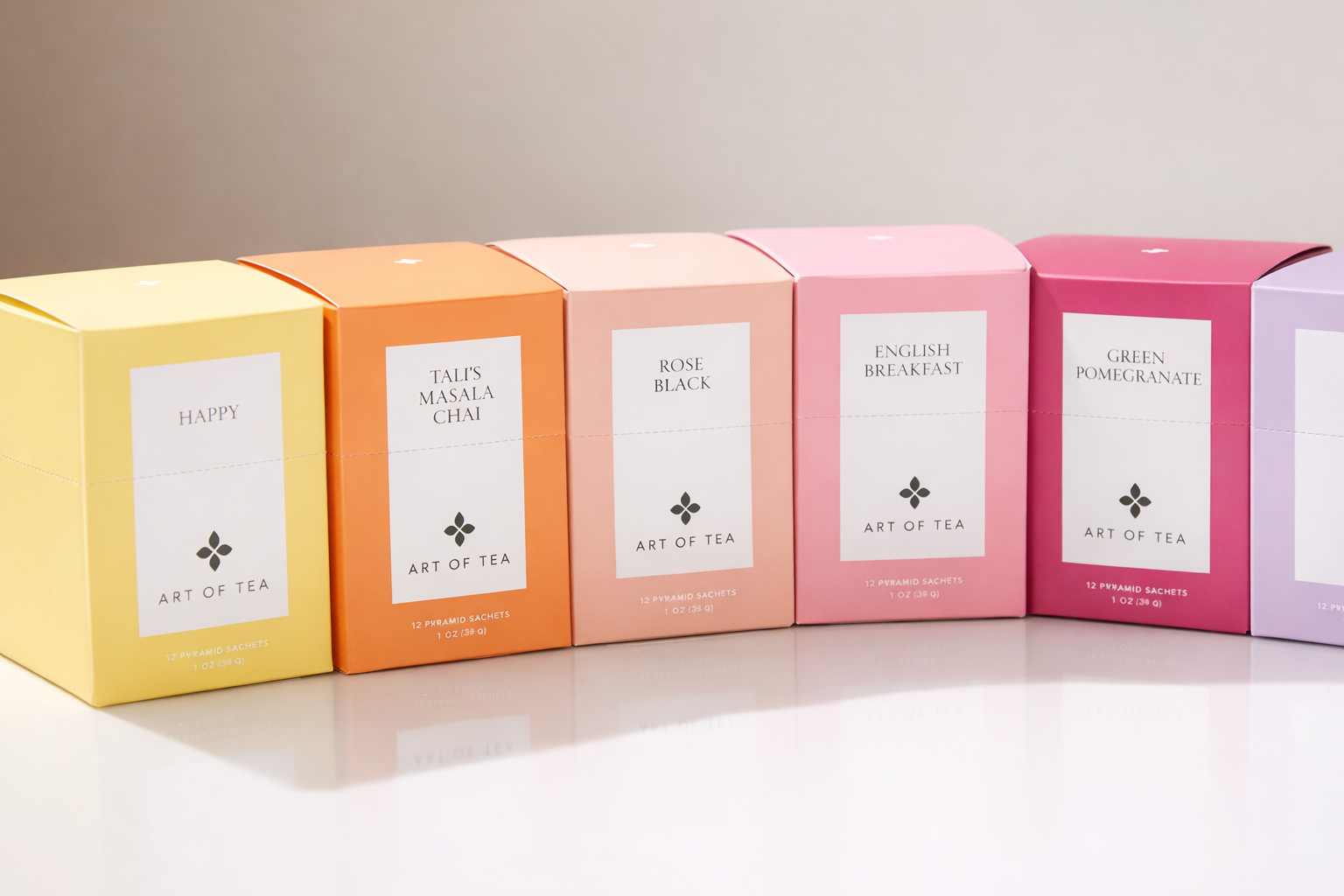
Tea becomes far more enjoyable when the flavor feels full and fresh instead of flat or dusty. Many tea drinkers notice that standard grocery tea bags often produce a thin cup with limited aroma. Premium sachets solve that problem by allowing whole leaves to expand while brewing.
Art of Tea packaged teas bring that experience into an easy everyday format. The brand combines high-quality whole-leaf tea with pyramid sachets designed for better infusion.
Each serving uses about 2–3 grams of tea, which gives the leaves enough space to release natural oils and flavor.
You also gain access to blends sourced from respected tea regions like China, India, Japan, Sri Lanka, and South Africa. According to the Tea Association of the U.S.A., more than 85% of tea consumed in the United States is black tea, showing how widely tea culture continues to grow.
If you want premium flavor without the mess of loose leaves, these sachets provide a simple solution. Here’s what you should know before adding them to your tea shelf.
Art of Tea Packaged Teas: Premium Whole-Leaf Tea in Convenient Sachets
Art of Tea launched in Los Angeles in 1996, founded by tea master Steve Schwartz. The goal focused on bringing high-grade whole-leaf teas to everyday drinkers.
Instead of grinding tea into dust like traditional tea bags, the company uses whole leaves inside pyramid sachets. This design allows the leaves to expand fully while steeping.
- You benefit in several ways:
- Better flavor extraction
- Stronger aroma
- Cleaner taste
- Less bitterness from over-processed tea
Each sachet uses plant-based PLA mesh, which comes from renewable plant materials. Many commercial composting facilities can process these sachets, which reduces environmental waste compared with conventional nylon tea bags.
From a brewing perspective, the pyramid shape provides more space for water circulation. This small detail makes a noticeable difference when you compare it with flat tea bags.
Organic Pyramid Tea Sachets and Eco-Friendly Brewing Design
Sustainability has become a major factor for tea buyers. Packaging and sourcing often influence purchasing decisions.
Art of Tea addresses this with several environmentally conscious choices:
| Feature | Benefit |
| Plant-based PLA mesh | Derived from renewable plant materials |
| Whole-leaf tea | Reduces tea dust waste |
| Commercial compostable sachets | Breaks down under proper composting conditions |
| Organic ingredients | Many blends use certified organic tea |
Many cafés and hospitality venues choose these sachets because they combine quality with responsible sourcing.
From practical experience in specialty tea service, pyramid sachets often produce clearer flavor and stronger aroma compared with paper tea bags. Restaurants frequently prefer them because customers can see the leaves expanding, which reinforces the premium experience.
Art of Tea Sachet Tea Flavors You Can Brew at Home
The brand offers multiple tea categories including black, green, herbal, and chai blends. Each provides a different brewing experience.
Popular selections include:
Organic English Breakfast
A classic blend of black teas from India and Sri Lanka.
Flavor profile:
- Rich and malty
- Smooth finish
- Natural sweetness
Caffeine: 40–60 mg per cup
Price on the official site:
- $17–$19 for 12 sachets
- $32–$38 for 50 sachets
Best brew temperature: 200–206°F for 3–5 minutes
Earl Grey Crème
A flavored black tea that blends bergamot citrus oil with soft vanilla.
Flavor notes:
- Bright citrus aroma
- Creamy sweetness
- Smooth black tea base
Caffeine: about 40 mg per cup
Pricing:
- $16–$20 for 12 sachets
- $34–$40 for 50 sachets
This tea works well with milk if you enjoy a softer Earl Grey profile.
Green Pomegranate
A refreshing green tea enhanced with natural pomegranate flavor.
Flavor notes:
- Light vegetal base
- Tart fruit brightness
- Clean finish
Caffeine: 25–35 mg per cup
Pricing:
- $16–$19 for 12 sachets
- $32–$40 for 50 sachets
Brew temperature: 175–185°F for 2–3 minutes.
Lower heat helps prevent bitterness.
Egyptian Chamomile
Whole chamomile flowers sourced from Egypt create a gentle herbal infusion.
Flavor notes:
- Honey-like sweetness
- Floral aroma
- Apple-like softness
Caffeine: 0 mg
Pricing:
- $15–$18 for 12 sachets
- $30–$35 for 50 sachets
Many tea drinkers choose this blend before sleep because it provides a calm herbal profile.
French Lemon Ginger
A caffeine-free herbal blend with ginger root and lemon peel.
Flavor notes:
- Bright citrus aroma
- Warm ginger spice
- Refreshing finish
Pricing:
- $15–$18 for 12 sachets
- $30–$35 for 50 sachets
Many people drink ginger tea for digestion support. The National Center for Complementary and Integrative Health notes that ginger has been widely studied for digestive comfort.
Tali’s Masala Chai
A spiced black tea featuring cinnamon, ginger, clove, and cardamom.
Flavor profile:
- Bold spice
- Strong black tea base
- Excellent with milk
Pricing:
- $16–$20 for 12 sachets
- $35–$42 for 50 sachets
Add steamed milk and sweetener for a café-style chai latte.
Art of Tea Sampler Box for Discovering New Tea Blends
If you want to explore the brand before committing to a full box, the sampler offers a useful entry point.
The assorted sampler box usually includes 12 sachets featuring multiple blends such as:
- English Breakfast
- Earl Grey Crème
- Green Pomegranate
- Mint Green
- Egyptian Chamomile
- Tali’s Masala Chai
- Bright Eyed turmeric blend
- Dark Chocolate Peppermint
Typical price range: $22–$30
This variety works well for gifting or for discovering personal favorites.
Many tea enthusiasts use sampler boxes as a tasting flight. Brew several cups in small portions and compare aroma, mouthfeel, and aftertaste.
How You Brew Art of Tea Sachet Tea for Best Flavor
Brewing temperature plays a major role in flavor quality.
Use this quick guide:
| Tea Type | Temperature | Steep Time |
| Black Tea | 200–206°F | 3–5 minutes |
| Green Tea | 175–185°F | 2–3 minutes |
| Herbal Tea | 200–212°F | 5–7 minutes |
Shorter steeping times create lighter flavor. Longer brewing increases body and strength.
A simple tip from professional tea tasting:
Always pre-warm your mug or teapot with hot water. This step keeps the temperature stable during infusion.
Real-World Experience Using Premium Pyramid Tea Bags
Many specialty cafés use pyramid sachets for consistency during busy service hours. Staff can brew quality tea without measuring loose leaves.
From practical tasting sessions with whole-leaf sachets, several differences stand out:
- aroma develops faster after pouring hot water
- Leaves visibly expand inside the pyramid mesh
- Flavor remains balanced across multiple brews
Some drinkers still prefer loose-leaf tea because it allows larger leaf pieces and custom measurements. Yet sachets provide strong convenience with minimal cleanup.
For offices, hotels, and small cafés, that convenience often outweighs the slight difference in leaf size.
Pros and Limitations of Art of Tea Sachet Teas
Every product has strengths and trade-offs.
Advantages
- Whole-leaf tea flavor
- Compostable plant-based sachets
- Wide selection of blends
- Consistent brewing results
- Easy preparation at home or work
Possible limitations
- Higher price compared with basic grocery tea bags
- Commercial composting required for full biodegradation
- Loose-leaf tea still offers maximum customization
From a value standpoint, many tea drinkers consider the price reasonable because the flavor quality exceeds most standard tea bags.
Conclusion
Good tea changes your daily routine in a small yet meaningful way. Aroma, warmth, and flavor create a short moment of calm during a busy day.
Art of Tea packaged teas offer a practical way to enjoy premium whole-leaf tea without complicated preparation. Pyramid sachets allow the leaves to expand, which helps deliver fuller flavor than typical flat tea bags.
You also gain access to blends sourced from respected tea regions and crafted with organic ingredients. Options range from classic English Breakfast to herbal favorites like chamomile and lemon ginger.
If you want better tea without dealing with loose leaves, these sachets make the process simple. Try a sampler box, brew a few varieties, and discover which blends fit your daily routine bes
Leave a Reply