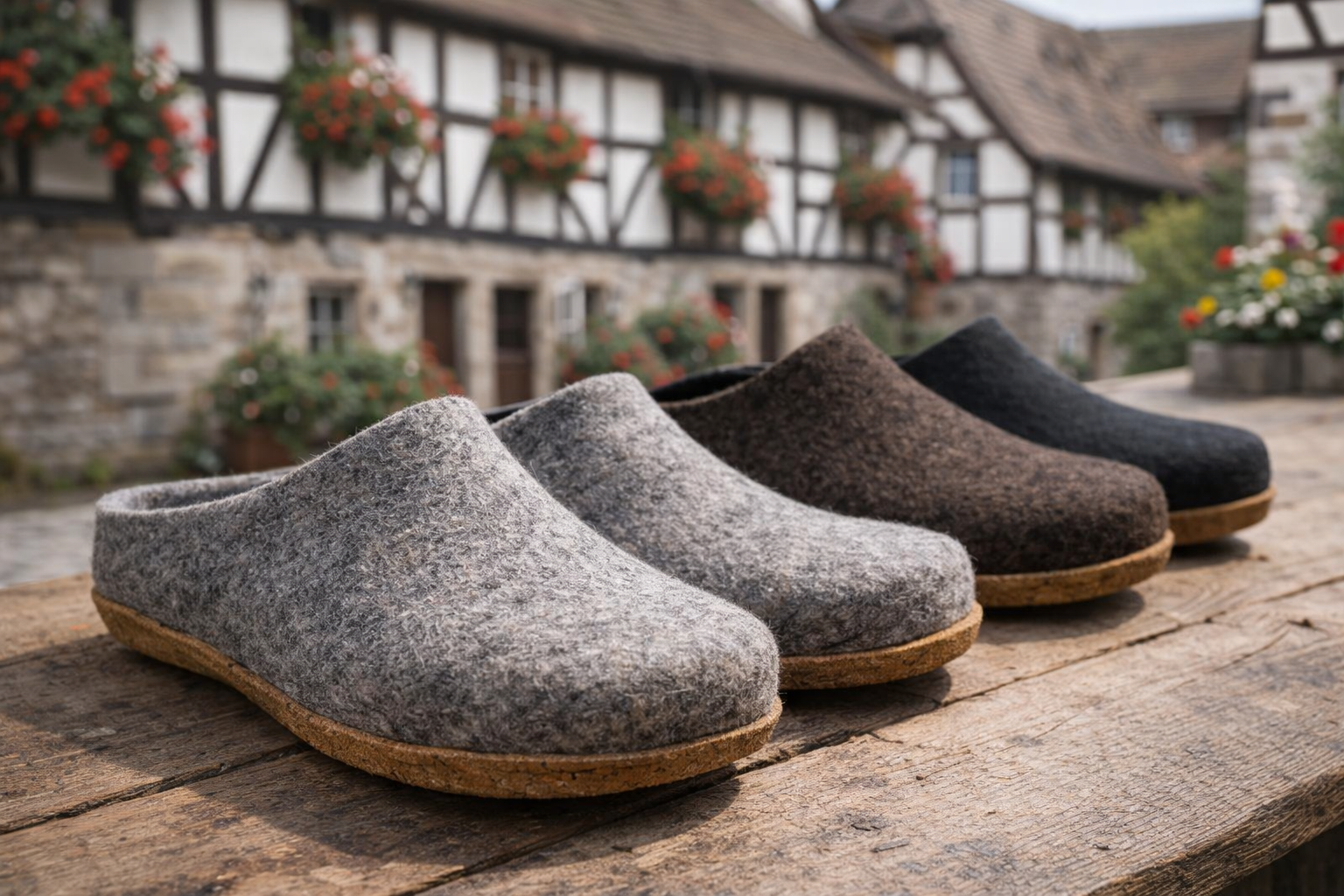
Cold floors test your patience fast, and flimsy house shoes rarely fix the problem. That’s where German Slippers stand out.
You get real structure, natural materials, and long-term comfort instead of soft padding that flattens in weeks. Many designs focus on foot health, using cork-latex footbeds and wool that adapts to your shape over time.
If you spend hours at home, your footwear matters more than you think. Support, breathability, and durability all play a role in how your feet feel by the end of the day. German brands have built a reputation for getting these details right.
German Slippers: What Makes Them Different From Regular House Shoes
German slippers focus on structure and material quality. You’re not getting thin foam or synthetic lining. Instead, you’ll notice features designed for long wear.
- Boiled wool uppers that regulate temperature
- Cork-latex footbeds that support your arch
- Durable outsoles for indoor and light outdoor use
- Breathable construction that reduces moisture buildup
Many standard slippers feel soft at first, then lose shape quickly. German slippers feel firmer out of the box, then improve as they mold to your foot. That difference becomes clear after a few weeks of daily use.
From experience testing structured slippers, the biggest shift comes from proper arch support. Standing or walking around the house feels more stable, especially during long work-from-home days.
Haflinger Grizzly Torben: A Support-Focused German Slipper
If you want strong support, the Haflinger Grizzly Torben stands out. This model uses 100% boiled wool and a cork-latex footbed that holds its shape.
Key Details
- Price: Typically $80–$135 (official US retail range)
- Upper: Boiled wool felt
- Footbed: Anatomical cork-latex
- Sole: Rubber for indoor and outdoor use
Real-World Performance
You’ll notice the firmness right away. The break-in period takes time, often a couple of weeks. After that, the footbed starts adapting to your foot shape.
During extended wear, the wool helps regulate temperature. Feet stay warm without overheating in moderate climates. That balance makes it useful for daily indoor use.
Limitations
- Initial stiffness may feel uncomfortable
- Not ideal for hot, humid environments
- Heavier than minimalist options
If you deal with foot fatigue or need more support at home, this model delivers consistent results.
Birkenstock Zermatt: A Structured and Customizable Option
Birkenstock applies its well-known footbed design to slippers with the Zermatt. You get a similar feel to their sandals, but in a closed, wool design.
Key Details
- Price: Around $90–$160 (official US pricing)
- Footbed: Removable cork-latex
- Lining options: Suede or shearling
- Fit: Narrow and regular widths
Why It Stands Out
The removable footbed changes how you use the slipper. Once it wears down, you can replace it instead of buying a new pair. That extends the lifespan and keeps support consistent.
From hands-on use, the deep heel cup makes a noticeable difference. Your foot feels stable, especially on hard floors like tile or hardwood.
Trade-Offs
- Higher price compared to basic slippers
- Less plush feel than soft-only designs
This model works well if you want structure with some flexibility in maintenance.
Falke Cosyshoe: Lightweight Comfort for Indoor Use
Falke takes a different approach. The Cosyshoe focuses on softness and flexibility rather than structure.
Key Details
- Price: Around $45–$80 (official US pricing
- Material: Merino wool blend
- Weight: Lightweight, sock-like feel
- Sole: Felt with anti-slip grips
Everyday Use
You slip these on like thick socks. The fit feels snug, and the wool keeps your feet comfortable without bulk. For quiet movement around the house, they perform well.
These are especially useful if you prefer a relaxed feel while lounging or working from a couch or desk.
Limitations
- Minimal arch support
- Not suitable for outdoor use
- Shorter lifespan than structured slippers
If comfort is your top priority and support isn’t a concern, this option fits well.
Best German Slippers for Plantar Fasciitis and Foot Pain
If you deal with foot pain, support becomes essential. German slippers with structured footbeds can help reduce strain.
What to Look For
- Defined arch support
- Deep heel cup
- Firm, stable sole
- Contoured footbed
Haflinger and Birkenstock models fall into this category. They provide alignment that soft slippers lack.
From user feedback across forums and reviews, people with plantar fasciitis often report improved comfort after switching to cork-based footbeds. The key factor is consistent support, not just cushioning.
Still, results vary. If pain is severe, consulting a specialist remains important.
Wool Slippers Made in Germany: Why Material Quality Matters
Wool plays a major role in performance. German brands rely on natural fibers for a reason.
Benefits of Wool
- Regulates temperature in different seasons
- Wicks moisture away from your skin
- Resists odor naturally
- Maintains structure over time
Boiled wool offers durability, while merino wool focuses on softness and breathability.
Synthetic materials often trap heat and moisture, leading to discomfort after long wear. Wool avoids that issue, making it a practical choice for daily use.
Are German Slippers Worth the Price?
At first glance, the price feels high. Many pairs cost between $80 and $160. Still, the long-term value changes the equation.
What You’re Paying For
- Durable construction
- Foot health support
- Replaceable components (in some models)
- Natural materials
From long-term use, structured slippers tend to last several years with proper care. Cheaper options often need replacement within a season.
That difference makes the cost easier to justify if you wear them daily.
Indoor vs Outdoor Use: Choosing the Right Type
Not all slippers handle outdoor use. Picking the right type depends on your routine.
Hybrid Use (Indoor + Outdoor)
- Haflinger Grizzly Torben
- Birkenstock Zermatt
These include rubber soles that handle short outdoor trips.
Indoor-Only Use
- Falke Cosyshoe
These focus on comfort and quiet movement indoors.
If you often step outside briefly, a durable sole makes a big difference.
How You Choose the Right German Slippers for Your Needs
Choosing the right pair depends on how you plan to use them.
Quick Decision Guide
- Need strong support → Haflinger or Birkenstock
- Prefer soft comfort → Falke
- Want outdoor flexibility → Rubber sole models
- Have foot pain → Structured footbed
It’s worth checking sizing carefully. Most brands use EU sizing, which can feel slightly different from US sizes.
Common Concerns Before Buying German Slippers
“They Feel Too Firm”
That’s normal at first. The break-in period allows the materials to adapt to your foot.
“They’re Too Warm”
Wool regulates temperature better than expected, though very hot climates may feel uncomfortable.
“They’re Expensive”
The longer lifespan and support often offset the higher upfront cost.
“Do They Last?”
With proper care, many pairs last for years, especially structured models.
Conclusion
German slippers offer a different experience from typical house shoes. You get structure, durability, and materials that work with your feet over time. That combination makes a noticeable difference in daily comfort.
If you spend hours at home, investing in proper support can improve how your feet feel at the end of the day. Start with your priorities—support, softness, or versatility—and choose a model that fits your routine.
Take a closer look at your current slippers. If they’re wearing out fast or lacking support, it may be time for an upgrade.
Leave a Reply