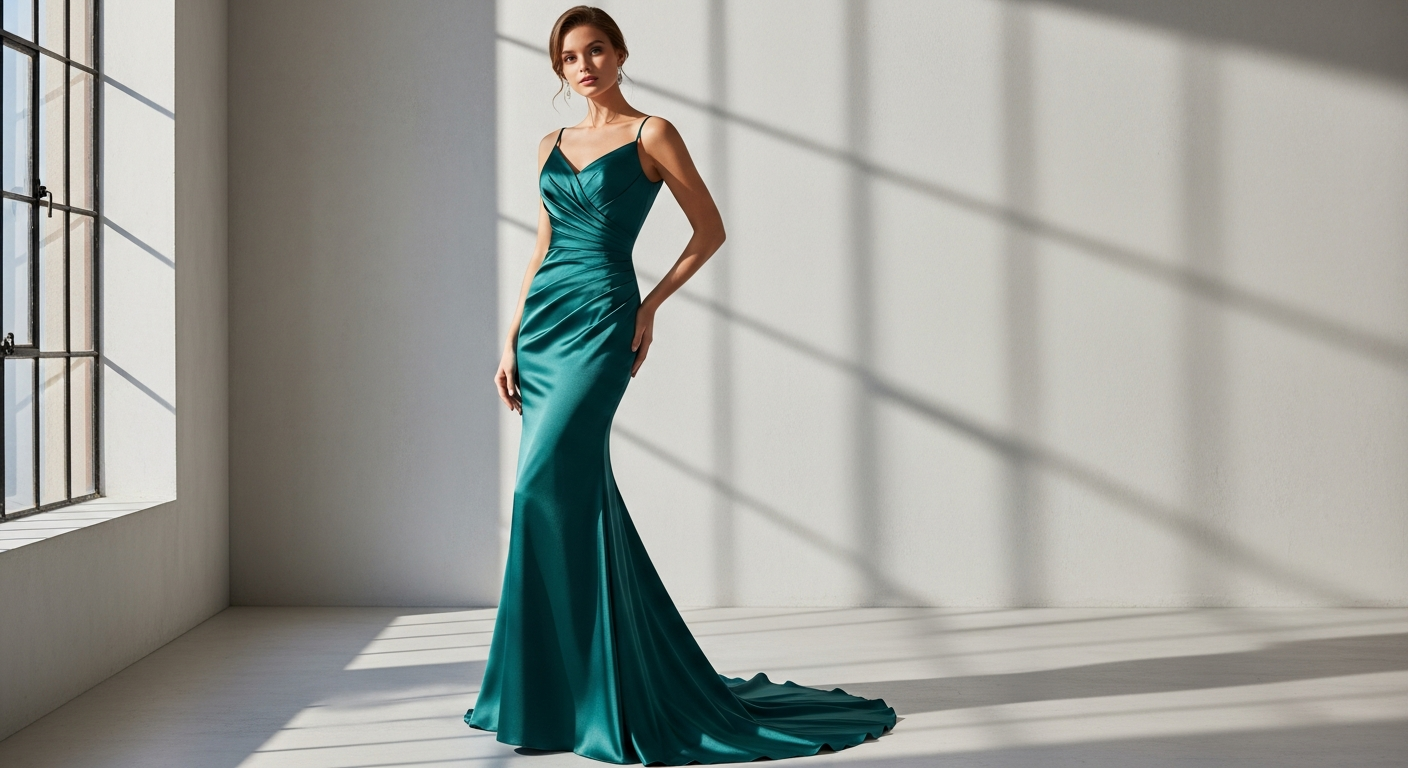
Nearly 40% of bridesmaids report sizing mishaps with their wedding attire—and it’s a frustration heard constantly. When investing in a dress that costs under $150 but needs to look absolutely flawless, getting the measurements right becomes everything. The stakes feel higher when standing beside the bride, with zero room for error.
The Chicsew Astrid has become a go-to choice for bridesmaids, wedding guests, and prom attendees who want that sophisticated mermaid silhouette without the luxury price tag. What sets this dress apart isn’t just its elegant one-shoulder design or show-stopping high side slit—it’s the brand’s commitment to making it work for your body through custom sizing and alteration support.
Explore the Chicsew Astrid collection and find your perfect fit today.
Understanding Chicsew Astrid Sizing Standards
How ChicSew’s sizing compares to standard bridal sizing conventions
ChicSew’s sizing operates within the standard bridal dress framework, but with notable nuances. Unlike some luxury brands that run generous, ChicSew’s Astrid tends to follow conventional wedding dress proportions—meaning a size 12 in the Astrid typically mirrors what you’d find in traditional bridal sizing. However, the mermaid silhouette creates different fitting dynamics than A-line or empire waist alternatives. The fitted bodice and curve-hugging nature of the design mean that even slight measurement variations can impact how the dress sits on your frame.
Breaking down the measurement chart: bust, waist, hip, and length specifications
ChicSew provides a comprehensive measurement chart that breaks down four critical dimensions. Bust measurements are taken across the fullest part of your chest, typically around the nipple line. Waist measurements focus on your natural waist, the smallest point around your torso. Hip measurements capture the fullest part of your hip area, roughly 9 inches below your natural waist. Length specifications vary depending on your height and heel choice, measured from the shoulder to where the hem should fall. The Astrid’s mermaid cut means that hip and thigh measurements carry extra weight in your decision—underestimating these areas can lead to a dress that feels uncomfortably tight through the hips.
Common sizing pitfalls and why standard sizes often run differently than expected
One frequent mistake is ordering based on your everyday clothing size rather than actual measurements. Your typical boutique dress size may not align with bridal sizing, which tends to run smaller. Another pitfall involves measuring while wearing different undergarments than you’ll wear to the event. The Astrid requires careful consideration of bra support, and measuring with one bra while wearing another to the event can shift your bust measurements significantly. Additionally, many customers underestimate how much the mermaid silhouette clings to the body—ordering a size up “to be safe” often results in excess fabric at the bust and waist, creating unflattering bunching around the side slit area.
The importance of measuring yourself versus relying on clothing size alone
Your dress size across different retailers varies wildly. A size 8 at one store might be a size 10 at another. The Astrid’s structured mermaid cut requires precision, so relying on your everyday size invites disaster. Taking your own measurements guarantees accuracy. This becomes particularly crucial if you’re between sizes—a professional seamstress or tailoring service can take your measurements for around $25-50, a small investment that often prevents costly alteration bills later.
Detailed measurement instructions for accuracy
Measure yourself in the undergarments you’ll actually wear with the dress. Stand in front of a mirror, relax your shoulders, and keep your posture natural rather than rigid. For bust, wrap the tape measure horizontally around the fullest part of your chest without pulling tight—you should be able to slip one finger under the tape. For waist, locate your natural waist by bending to one side; the crease is your waist point. Measure horizontally at that spot with gentle tension, not cinched. Hip measurements start about 9 inches below your natural waist and should capture the fullest part of your hips, again with one finger of slack. Have someone assist you if possible, or use a full-length mirror to verify accuracy. Record measurements three times and use the average—it accounts for fluctuation.
Size range availability and color availability across different sizes
The Astrid is available in an extensive size range from XS to 5XL, with custom sizing bridging gaps for those between standard sizes. Color availability, however, fluctuates significantly by size. Popular shades in smaller sizes may sell out quickly, while larger sizes sometimes have limited color options at any given time. Planning your purchase around color availability rather than rushing into a less-desired shade prevents regret and future sizing complications from trying to swap colors.
Real customer feedback on how Astrid dresses fit true to size or run large or small
Customer reviews reveal that the Astrid generally runs true to size when measurements are accurate. However, a notable subset of customers reports the dress running slightly large through the bust and small through the hips—the mermaid silhouette’s aggressive hip fit catches people off guard. Those with narrower shoulders sometimes note the one-shoulder neckline slips without proper undergarment support. Petite customers frequently mention receiving dresses longer than anticipated, even when selecting petite lengths. Taller customers report the opposite issue. These variations underscore the necessity of using ChicSew’s specific measurement chart rather than assumptions.
Why the mermaid silhouette affects how sizing feels compared to other dress styles
The mermaid cut differs fundamentally from traditional bridal silhouettes. It fits snugly from bust through hip, then flares dramatically at the knee or mid-thigh where the slit begins. This means a slight miscalculation in hip measurement creates noticeable discomfort, whereas an A-line dress might accommodate the same error without issue. The mermaid’s structured nature also amplifies fit perception—if it fits correctly, the transformation is striking and flattering. If it’s off, it’s noticeably uncomfortable and unflattering. This makes precision sizing non-negotiable for the Astrid.
Custom Sizing Options That Actually Deliver Results
What custom sizing includes and how it differs from standard sizing
ChicSew’s custom sizing allows you to input your exact measurements rather than selecting from pre-set sizes. The dress is then constructed according to your specific dimensions. Custom sizing typically includes adjustments to bust, waist, hip, and length, with some options including shoulder width modifications. This differs dramatically from standard sizing, which applies identical patterns across a range of sizes. For the Astrid, custom sizing means the mermaid curve adapts to where your body actually curves, not where a pre-calculated size assumes it should.
The additional cost for custom sizing and whether it’s worth the investment
Custom sizing typically adds $20-40 to the base price, bringing total costs to approximately $170-190. This modest premium becomes worthwhile when you consider that alterations often run $100-200+ and still may not achieve the precision custom sizing provides. If you’re between sizes, outside typical sizing ranges, or have unusual proportions, custom sizing pays for itself through reduced alteration needs.
How far in advance you need to order custom-sized dresses
Custom orders require 4-8 weeks minimum for production and shipping, compared to 2-3 weeks for standard sizes. Wedding timelines demand ordering custom sizes at least 10-12 weeks before your event. This allows buffer time for arrival, fitting assessment, and any minor adjustments. Rushing a custom order risks receiving the dress too close to your event for meaningful alterations if needed.
Which measurements ChicSew prioritizes when creating a custom Astrid
For the Astrid specifically, hip and waist measurements take priority because the mermaid silhouette depends on precise hip fit. Bust measurement matters, but the one-shoulder design provides some flexibility. Length is crucial and often requires custom adjustment for heights outside the 5’2″ to 5’8″ range. ChicSew’s custom process emphasizes these three areas, so providing accurate measurements here yields the best results.
Success stories: customers who nailed their fit through custom sizing
Customers with petite frames consistently report success with custom sizing, noting that the Astrid arrives ready to wear with minimal alterations. Plus-size customers praise custom sizing for accommodating larger measurements while maintaining the dress’s proportions and design integrity. Brides with unusual measurements—broad shoulders, narrow hips, or significant height variation—frequently report that custom sizing eliminated the need for extensive, expensive alterations. These success stories aren’t anomalies; they reflect what custom sizing is designed to accomplish.
The role of custom sizing in accommodating petite, plus-size, and tall body types
Petite customers benefit tremendously from custom length adjustment, avoiding the excessive hem work that standard dresses often require. Plus-size custom sizing maintains the dress’s elegant proportions rather than simply scaling up a smaller size. Tall customers gain length in the skirt and sometimes in the bodice, ensuring the dress doesn’t look disproportionately short. Custom sizing democratizes the Astrid, making it genuinely accessible across the full spectrum of body types rather than just standard ranges.
Potential limitations of custom sizing and when it may require additional alterations anyway
Custom sizing can’t account for everything. If your posture, weight, or body composition shifts between ordering and wearing the dress, fit issues emerge. Fabric shrinkage, though minimal with satin, can occur. The Astrid’s one-shoulder neckline sometimes requires minor adjustment even with custom sizing if your shoulder angle differs from standard proportions. Additionally, custom sizing can’t replicate in-person fitting feedback—a seamstress may identify fit issues that wouldn’t occur to you when measuring at home.
Timeline expectations from order to delivery for custom-sized pieces
Expect 4-8 weeks for production, 1-2 weeks for international shipping (or 3-5 days for domestic expedited options). ChicSew typically provides tracking information around week 3. The total timeline from order to arrival averages 5-10 weeks. Build this into your planning calendar with a minimum of 2 additional weeks before your event to assess fit and arrange alterations if needed.
Order your custom Chicsew Astrid now and ensure a flawless fit for your big day.
The Alteration Reality: What to Budget and Expect
Why the Astrid often requires alterations despite custom sizing options
Even with custom sizing, the Astrid frequently needs alterations. Body weight fluctuation between ordering and delivery, hem adjustments for specific heels, and fine-tuning of neckline placement are common. The mermaid silhouette’s precision fit means small deviations become noticeable, and professional tailors often recommend minor tweaks for optimal appearance. This isn’t a reflection of quality; it’s the nature of mail-order formal wear meeting the demands of a curve-hugging silhouette.
Common alterations needed: hemming, taking in seams, adjusting the neckline
Hemming is the most frequent alteration, typically running $30-60 depending on complexity. The Astrid’s side slit requires careful hemming to prevent fraying and maintain the slit’s integrity. Taking in seams at the bust, waist, or hips costs $40-80 per seam and is common when custom sizing still leaves slight excess. Neckline adjustments, where the one-shoulder strap is repositioned or tightened, typically cost $25-50. Some customers also request side slit adjustments to raise or lower where it begins, a moderate alteration running $30-50.
Average alteration costs and how to find a reliable tailor
Simple hemming averages $40. Multiple seam adjustments increase costs to $80-150. Comprehensive alterations combining hem work with seam adjustments average $150-200. Finding a reliable tailor involves asking for referrals from local bridal shops, checking online reviews on Yelp or Google, and requesting a consultation before committing. Quality matters here—a skilled seamstress prevents fabric damage and ensures alterations enhance rather than compromise the dress.
ChicSew’s alteration reimbursement program: how it works and eligibility requirements
ChicSew offers an alteration reimbursement program that refunds up to a certain amount toward professional alterations. Eligibility requires purchasing directly from ChicSew within a specific timeframe before your event. The program reimburses receipts for standard alterations like hemming, seam adjustments, and neckline modifications. It doesn’t cover complete reconstructions or extensive changes. To qualify, you typically need to provide proof of alteration costs and submit documentation within a set window. This program is a genuine safety net, especially for those ordering custom sizes that still require fine-tuning.
The side slit consideration: how alterations affect this signature design element
The side slit is the Astrid’s showstopper, but it complicates alterations. Hemming requires careful attention to prevent the slit edges from fraying or becoming uneven. Raising or lowering the slit’s starting point requires precise seam work. Taking in side seams must account for how it affects the slit’s width and appearance. A competent tailor understands these dynamics; discussing slit adjustments specifically during your alteration consultation prevents misunderstandings.
Timeline for alterations and coordinating with wedding or event dates
Most tailors require 2-4 weeks for standard alterations. Complex work or rush orders cost more and take 1-2 weeks. Plan alterations to complete 1-2 weeks before your event, allowing a buffer for adjustments if something isn’t quite right. This timeline means receiving your dress by week 8 before your event if ordering custom, leaving ample alteration time without stress.
Before-and-after alteration scenarios to set realistic expectations
A dress arriving slightly loose through the hips transforms dramatically after seam work, becoming the form-fitting silhouette you envisioned. A hem that’s 2 inches too long becomes elegant once hemmed to your heel height. A one-shoulder neckline that slips settles perfectly after repositioning. Conversely, expecting major reconstructions—like changing the neckline style entirely or dramatically altering the mermaid silhouette—isn’t realistic. Work with your tailor on what’s achievable and what’s within the dress’s design parameters.
DIY versus professional alterations: when each approach makes sense
Professional alterations are non-negotiable for the Astrid. This isn’t a casual dress where slight imperfections fade into the background. The fitted mermaid silhouette demands precision that DIY work rarely achieves. Attempting hemming, seam adjustments, or neckline work yourself risks permanent damage to the satin fabric. The only exception: simple emergency repairs like reattaching a seam that separated, which you could temporarily hand-stitch until professional repair becomes possible.
Navigating Returns and the Sizing Exchange Process
ChicSew’s return policy for the Astrid dress and any sizing-related exceptions
ChicSew’s standard return policy allows 30 days for returns, though sizing-specific returns sometimes extend this window. Unaltered dresses in original condition qualify for returns. Custom-ordered dresses have restricted return options since they’re made specifically for you. Sizing exchanges—returning a dress because it doesn’t fit and receiving the correct size—fall into a different category than standard returns and may have more favorable terms.
How to initiate a return or exchange if the dress doesn’t fit as expected
Contact ChicSew customer service immediately with photos showing the fit issue and your original order details. Explain whether you’re requesting a return or exchange. For exchanges, specify your new size and color preference. ChicSew will provide return shipping instructions and authorization. Package the dress carefully, ensuring it remains clean and unaltered. Request tracking to ensure ChicSew receives it. Timeline for processing averages 7-14 days after receipt, then shipping your replacement.
Timeframe for returns and any restocking fees that may apply
ChicSew processes returns within 14 days of receipt. Restocking fees vary: unaltered returns typically avoid fees, while altered dresses or those outside the standard return window may incur 10-20% restocking charges. Final sale items don’t qualify for returns. Check your purchase receipt for specific terms—they’re often mentioned in the order confirmation email.
Return difficulty factors: altered dresses, custom orders, and size-specific inventory
Altered dresses become significantly harder to return—most retailers won’t accept them. Custom orders rarely qualify for returns since they’re made specifically for you. Size-specific inventory issues mean if your original size sells out, exchanges become complicated; ChicSew may offer alternative sizes or colors rather than exact replacements. These complications underline the importance of correct sizing from the start.
What happens if your size sells out and you need an exchange
If your size sells out, ChicSew typically offers alternatives: a different size that might fit with minor alterations, an alternative color in your size if available, or a refund. They may also special-order your original size, though this requires waiting another 4-8 weeks. Discuss options with customer service; they’re often flexible about solutions when inventory issues aren’t your fault.
Documentation you’ll need for a smooth return process
Keep your original order confirmation email, which contains your order number and itemization. Photograph the dress before returning it, documenting its condition. Save your measurements and any correspondence about fit issues with customer service. If using the alteration reimbursement program, maintain all tailor receipts and documentation. This paper trail ensures smooth processing if disputes arise.
Customer experiences with returns: what’s worked and what hasn’t
Customers report success with returns when dresses arrive unaltered and within the 30-day window. Returns become problematic when alterations have been made, when requests come outside standard timeframes, or when inventory issues prevent exact replacements. Communication matters—those who contact customer service promptly and clearly about issues report faster, more favorable resolutions. Delayed returns or vague explanations often result in rejection or restocking fees.
Communication tips for getting faster resolution on sizing disputes
Contact customer service immediately upon receiving a dress with fit issues rather than waiting. Include specific details: where the dress is tight, how much excess fabric exists, and whether you’ve had it altered. Provide measurements and confirm you used their sizing chart. Include photos showing the issue. Maintain a respectful, problem-solving tone in communications. Follow up if you don’t receive responses within 48 hours. ChicSew’s customer service responds more favorably to organized, specific inquiries than vague complaints.
Fabric Quality and How It Impacts Fit Perception
The soft satin fabric composition and why it matters for the overall look
The Astrid’s soft satin is a polyester-dominant blend, typically 100% polyester, designed to mimic the luxury and drape of silk satin at a fraction of the cost. This fabric weight and composition affect how the mermaid silhouette clings and flows. Quality satin drapes beautifully rather than clinging like cheap material, creating the elegant lines that make the Astrid desirable. The fabric’s structure means fit becomes more noticeable—a dress that fits properly glides smoothly, while one that’s tight or loose shows immediately.
How premium versus standard satin affects the dress’s drape and movement
Premium satin has a tighter weave, heavier weight, and superior finish that creates fluid movement and catches light beautifully. Standard satin feels thinner, sometimes slightly stiff, and shows wrinkles more readily. The Astrid’s satin quality sits in the middle-to-premium range for the price point. This means the fabric generally satisfies customers, though some expecting luxury-level satin find it slightly disappointingly lightweight. The fabric’s quality significantly impacts whether the dress feels luxurious or cheap—a major fit perception factor.
Fabric care instructions and how washing impacts the fit over time
The Astrid requires dry cleaning or gentle hand washing in cold water. Machine washing risks damage and shrinkage. Improper care can shrink the dress slightly, creating fit issues after purchase. Dry cleaning maintains the fabric’s structure and appearance. Store the dress on a padded hanger away from direct sunlight to prevent color fading or fabric degradation. Following care instructions meticulously prevents fit changes that might develop post-alteration.
Why some customers perceive the fabric as luxurious while others note concerns
Perception depends on expectations and comparison points. Those comparing the Astrid to other $150 dresses find the satin quality exceptional. Those comparing it to luxury $400+ gowns find it less impressive. The fabric’s finish and drape directly influence this perception—in ideal lighting and fit, it appears luxurious; in poor lighting or improper fit, it can appear cheap. Customer reviews often reflect their individual baseline expectations as much as objective quality.
The relationship between fabric weight and how the mermaid silhouette sits
Heavier satin creates a more structured, graceful drape through the mermaid curve. Lighter satin clings more aggressively and shows body contours in ways that can feel unflattering for some body types. The Astrid’s satin weight is moderate, offering a balance between structure and movement. This influences fit feel—the dress should feel secure and smooth rather than clingy or loose. Weight variations between production batches sometimes occur, meaning one dress’s fit might differ slightly from another’s based on fabric weight variations.
Pilling, durability, and longevity considerations for the satin material
Polyester satin, while durable, can pill with friction or rough handling. The Astrid’s satin resists pilling better than lower-quality alternatives but may develop minor pilling if worn repeatedly or stored incorrectly. The fabric’s longevity is strong—with proper care, the dress remains wearable and beautiful for years. However, frequent wear (multiple events, parties, or dancing) accelerates wear more than occasional wear. Most customers report the dress maintains appearance after one formal event; multiple wearings create more visible aging.
Comparing Chicsew’s satin to other bridesmaid dress brands at similar price points
Compared to other brands in the $120-180 range, ChicSew’s satin quality is competitive. Some brands use slightly cheaper material; others charge more for marginally better satin. The Astrid’s satin represents a smart value—not the absolute premium option, but notably higher quality than budget alternatives. This positioning explains the dress’s popularity; it delivers luxury appearance at an accessible price.
How the fabric behaves during the high side slit—does it fray or hold up?
The satin fabric holds up well to the side slit with proper finishing. ChicSew seals the slit edges, preventing fraying in normal wear. The satin’s tight weave means it doesn’t unravel easily like looser weaves might. However, rough handling, catching the slit on objects, or improper alteration can cause fraying. The fabric’s durability means the slit maintains its elegant appearance through your event and beyond with reasonable care.
Color Selection and How It Influences Your Sizing Decision
The full spectrum of colors available for the Astrid dress
The Astrid ships in an extensive color palette including jewel tones (sapphire, emerald, ruby), pastels (blush, champagne, pale yellow), neutrals (black, navy, gray, silver), and statement shades (burgundy, plum, coral). ChicSew regularly updates the color lineup seasonally, retiring some shades while introducing others. The variety ensures most wedding color schemes have a complementary option.
Whether certain colors are more prone to sizing inconsistencies
Darker colors occasionally show fit inconsistencies more noticeably than lighter shades because they emphasize silhouette and seams. However, this is a perception issue rather than a manufacturing one—dark fabrics don’t actually fit differently. Where inconsistencies occur, they reflect production variations affecting all colors equally. Color choice doesn’t influence fit reliability; it influences whether fit issues become visually apparent.
How color availability varies by size (popular colors selling out faster)
Popular shades like navy, burgundy, and blush sell out fastest in smaller sizes (XS, S, M). Larger sizes often maintain color availability longer simply because fewer customers order them. If you have specific color requirements, ordering quickly prevents disappointment. This dynamic sometimes means limiting your size choice to available colors, reinforcing the importance of ordering on a realistic timeline rather than rushing.
Coordinating multiple bridesmaids in the same color while managing different sizes
When coordinating multiple Astrid dresses in one color, order all dresses simultaneously to ensure color consistency across batches. Different production runs sometimes produce slight color variations, especially in lighter shades like blush or champagne. Having multiple people in slightly different shade variations becomes noticeable in photos. Ordering together, even if delivery times vary, minimizes this risk by pulling from the same inventory batch.
Color-specific care instructions and how they affect long-term fit
While care instructions don’t vary by color, certain colors require different handling. Reds and dark colors bleed slightly in first wash; cold water and separate washing prevents color transfer. Lighter colors like blush require gentle handling to prevent staining. These care differences don’t affect fit directly, but improper care shortening the dress’s lifespan means you won’t have the option to wear it to future events. Proper color-specific care maintains the dress’s condition and fit integrity long-term.
Seasonal color trends and which shades are most popular for 2026 weddings
For 2026, jewel tones dominate—emerald, sapphire, and burgundy continue trending upward. Dusty, muted tones (sage, mauve, dusty blue) gain popularity alongside these jewels. Classic navy and black remain timeless choices. Pastels persist but trend less prominent than recent years. Bold corals and oranges appeal to modern couples seeking distinctive palettes. Understanding these trends helps you choose colors that feel current and that you won’t regret wearing in photos years later.
Matching the Astrid to different wedding themes and venue aesthetics
The Astrid’s elegant, modern design complements virtually any wedding aesthetic. Classic venues pair beautifully with jewel tones and navy. Garden weddings suit soft pastels and sage tones. Modern venues work with bold jewels or classic black. Beach weddings benefit from lighter shades like champagne, blush, or silver. Bohemian celebrations align with muted jewels or warm pastels. The dress’s sophisticated style bridges formality levels, making color choice your primary tool for matching aesthetic.
Requesting color swatches before committing to your size and purchase
ChicSew sometimes provides swatch samples before purchase, or you can request photos showing the color on different skin tones. Some websites allow virtual try-on features showing the color on various models. Ordering a swatch or requesting detailed photos prevents color regret—computer screen colors often differ significantly from real fabric. This small effort prevents ordering a dress in a shade you later discover clashes with your skin tone or wedding aesthetic.
Body Type Considerations and the Mermaid Silhouette
How the mermaid cut flatters different body types (pear, apple, hourglass, rectangle)
The mermaid silhouette flatters pear-shaped bodies by skimming the waist and hips then flaring below the hips, balancing proportions. Apple-shaped figures benefit from the one-shoulder neckline, which draws eyes upward, combined with the fitted waist emphasis. Hourglass shapes shine in the Astrid because the mermaid cut hugs curves beautifully, creating a dramatic silhouette that celebrates proportions. Rectangle-shaped bodies gain definition from the fitted bodice and curves from the mermaid skirt, creating the appearance of increased curves. The design is remarkably inclusive, working across body types when sized correctly.
The one-shoulder neckline and its impact on different shoulder and arm shapes
The one-shoulder design flatters most shoulder shapes by accentuating one side and creating asymmetry that elongates the neck and shoulders. Narrow-shouldered people sometimes find the strap slips unless proper undergarment support exists. Broad-shouldered individuals may find the asymmetry less flattering; they sometimes request a small strap adjustment to feel more secure. The neckline also emphasizes arm shape—those self-conscious about arm appearance sometimes express concern. Properly fitted, the one-shoulder style becomes a confidence booster; poorly fitted, it becomes a source of anxiety.
Whether the side slit works for all body types or requires modifications
The high side slit works beautifully for most body types, creating a modern, sexy aesthetic. Those with larger thighs sometimes feel self-conscious about the slit’s height, though the fitted mermaid skirt usually provides coverage and support. Petite customers occasionally find the slit too dramatic relative to their frame, sometimes requesting it lowered slightly. Tall customers sometimes feel the slit doesn’t start high enough for proportion balance. Minor slit adjustments during tailoring can address these concerns without compromising the dress’s design.
Bust support and whether the Astrid requires a strapless bra or built-in support
The Astrid’s one-shoulder design doesn’t provide support from a bra perspective; you must wear supportive undergarments beneath. Strapless or low-back bras work, though many customers prefer a sticky bra or adhesive cups for the seamless appearance under satin. The dress itself has no built-in support structure like boning or cups, so proper bra selection becomes critical for comfort and appearance. Measuring your bust with your intended undergarment ensures the dress accommodates your chosen support system.
Hip and thigh considerations: how the mermaid silhouette hugs versus drapes
The mermaid silhouette hugs from hip through mid-thigh, then flares. This means sizing becomes crucial in hip and thigh areas—too small creates uncomfortable tightness; too large bunches unattractively. The fitted portion should feel snug but not restrictive, allowing comfortable movement, sitting, and dancing. Those with significant hip-to-thigh fullness must accurately measure these areas to avoid undersizing. The flared portion below the slit allows comfortable movement despite the fitted portion above.
Petite versus tall frame adjustments and length expectations
Petite customers (under 5’3″) often need significant hemming. Even the petite length option frequently requires adjustment. The one-shoulder design sometimes feels less balanced on petite frames because proportions differ. Custom sizing allows adjusted bodice length for petite bodies, improving overall proportion balance. Tall customers (over 5’9″) may find even petite lengths inadequate, necessitating custom production. The mermaid silhouette actually flatters tall frames beautifully, emphasizing length; proper length adjustment ensures this advantage shines.
Plus-size fit experiences and custom sizing benefits for larger sizes
Plus-size customers report generally positive experiences with the Astrid, particularly with custom sizing. The mermaid silhouette doesn’t require extreme waist emphasis, making it flattering across larger size ranges. Custom sizing ensures the dress doesn’t feel simply scaled-up but rather proportioned for larger bodies. Plus-size customers praise the confidence boost the dress provides—the design feels elegant and sexy rather than matronly. Those ordering standard plus sizes sometimes need minor seam adjustments; custom sizing usually eliminates this need entirely.
Confidence factor: how proper sizing affects how you feel in the dress
A perfectly fitted Astrid becomes a confidence supercharger. The luxurious satin, the flattering mermaid curve, the eye-catching side slit—when they all fit your body correctly, you feel beautiful, elegant, and ready to shine. A dress that doesn’t fit properly undermines confidence despite the design’s inherent beauty. Investing in proper sizing through accurate measurement, custom options, or quality alterations directly impacts how you feel wearing the dress. This emotional dimension is sometimes overlooked but significantly influences your overall experience.
Timing Your Purchase and Pre-Event Preparation
Recommended ordering timeline for weddings, proms, and formal events
For standard sizing, order 8-10 weeks before your event. For custom sizing, extend this to 12-14 weeks to account for production time plus alteration scheduling. This timeline ensures arrival with 4-6 weeks before your event—adequate time for fitting assessment and alterations without stress. Last-minute orders within 6 weeks risk time crunches if alterations prove necessary or if sizing issues emerge.
How far in advance to order for custom sizing versus standard sizing
Standard sizing requires 10 weeks minimum, ideally 12 weeks. Custom sizing demands 14 weeks minimum from order to event date. This accounts for the 4-8 week production, shipping time, arrival assessment, and 2-4 week alteration window. Cutting this timeline shorter means either rushed alterations (which sometimes result in mistakes) or attending your event in an unfinished dress.
Accounting for alteration time in your overall timeline
Tailor consultations typically happen within 1 week of dress arrival. Alterations themselves take 2-4 weeks depending on complexity and tailor workload. A final fitting occurs before pickup, occasionally requiring minor adjustments. Build in a 1-2 week buffer after alterations complete in case unexpected issues require fixing. This ensures the dress is truly ready well before your event rather than arriving literally days beforehand.
Expedited shipping options and whether they’re worth the cost
ChicSew offers expedited shipping, usually costing $20-40 extra for 3-5 day shipping versus standard 7-14 day shipping. This becomes worthwhile only if you’re running behind schedule—spending extra money to accelerate arrival by a few days usually isn’t necessary. However, if an alteration date is imminent and standard shipping won’t arrive in time, expedited shipping prevents catastrophe. Evaluate whether the extra cost justifies the timeline benefit before committing.
Final fitting appointment scheduling and last-minute adjustment windows
Schedule your tailor appointment for 2-3 weeks before your event, allowing time for adjustments if needed. Most tailors can accommodate rush appointments if issues arise, though this costs more. Request a final fitting appointment 1-2 weeks before your event to confirm everything is perfect. Some tailors hold dresses until 48 hours before events as a safety window for final last-minute adjustments. Knowing your tailor’s policies prevents surprises.
Storage and care in the weeks leading up to your event
Store the dress on a padded hanger in a cool, dry closet away from direct sunlight. Avoid plastic storage bags; use breathable garment covers. Don’t dry clean immediately before the event—do it at least a week prior to allow time for any odors to dissipate. Keep the dress undisturbed and protected from potential stains during the final weeks. The day before your event, hang it in a steamy bathroom for 15 minutes to release any wrinkles, then hang in the event venue’s climate-controlled space if possible.
Backup plans if your dress arrives with sizing issues close to your event date
If your dress arrives with fit problems within 1-2 weeks of your event, immediately contact your tailor about rush alterations. Most tailors accommodate rush work with expedited fees. If alterations can’t resolve the issue and return/exchange timelines won’t work, contact ChicSew customer service about emergency solutions. In absolute worst-case scenarios where alterations aren’t possible, some bridesmaids have
Leave a Reply