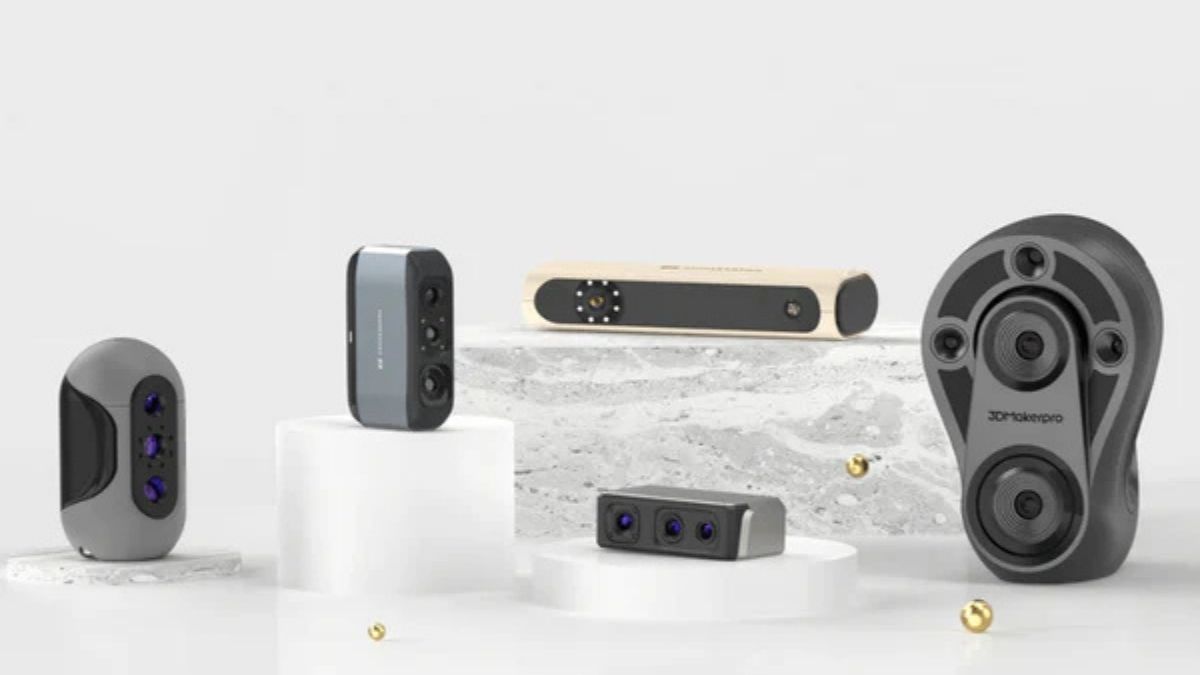
3DMakerpro focuses on portable 3D scanners designed for creators, engineers, and hobbyists who need a more accessible way to digitize real-world objects.
Its scanners use structured-light technology to turn physical items into editable 3D models for printing, design, reverse engineering, and preservation work.
The brand has built its identity around one idea: making precision scanning easier to reach. That matters in a category where professional-grade tools have often been too expensive or too complex for smaller studios, independent makers, and first-time users.
Where the Company Comes From
3DMakerpro was established in 2015 under Shenzhen Jimuyida Technology Co., Ltd., with headquarters in Shenzhen, China. Since then, it has remained focused on 3D scanning and digital capture technology.
Its long-term growth appears to be tied to steady product development rather than a broad consumer electronics approach. That gives the brand a more specialized position in the market.
Why Its R&D Matters
A major part of 3DMakerpro’s appeal is its research and development focus. The company reports a team of more than 100 specialists working in optics, electronics, machine vision, and 3D modeling.
That technical depth helps explain why the brand has been able to expand into multiple scanner categories while still emphasizing portability and precision. It also supports its effort to serve both casual users and more demanding professional workflows.
How the Product Range Is Structured
3DMakerpro offers several scanner families, each aimed at a different kind of task. Instead of forcing one device to do everything, the lineup is split by object size, accuracy needs, and workflow complexity.
Main scanner series
- Seal and Seal Lite: built for very small objects and fine-detail capture
- Mole series: suited for medium-sized items with solid detail retention
- Lynx series: made for scanning larger objects with a wider capture range
- Moose series: adds AI-assisted scanning and blue-light technology
- Whale series: aimed at industrial and heavy-duty scanning demands
The company also sells accessories like turntables, mounts, and connectors, along with JMStudio software for scan processing and model editing.
What the Technology Offers
3DMakerpro scanners are built around high-precision capture, with stated accuracy ranging from 0.01 mm to 0.05 mm depending on the model. That range makes the lineup relevant for everything from small design work to more technical modeling tasks.
Several core features appear across the brand’s ecosystem:
- Portable and lightweight scanner designs
- Handheld operation for flexible use
- AI visual tracking for better alignment
- Optical stabilization during scanning
- Compatibility with Windows, macOS, Android, and iOS
- Export support for OBJ, STL, and ASC files
These features make the scanners easier to fit into existing creative and production workflows.
Where 3DMakerpro Fits in the Market
3DMakerpro positions itself as a lower-cost alternative to premium 3D scanning brands. That value-focused approach is one of the main reasons it gets attention from independent creators and smaller engineering teams.
Reviewers often highlight the hardware value, portability, and scan detail. At the same time, software usability is sometimes mentioned as an area that could improve. That gives the brand a familiar profile: strong hardware appeal with room to refine the software experience.
What Users Seem to Like Most
Across user feedback, 3DMakerpro generally earns praise for three things: price, portability, and detail quality. Models such as the Mole, Seal, and Moose are often noted for offering practical results without the cost barrier attached to more established industrial systems.
The overall impression is that 3DMakerpro succeeds by balancing performance with accessibility. It may not replace every enterprise scanner, but it has made precision 3D capture more realistic for a much wider group of users.
Leave a Reply