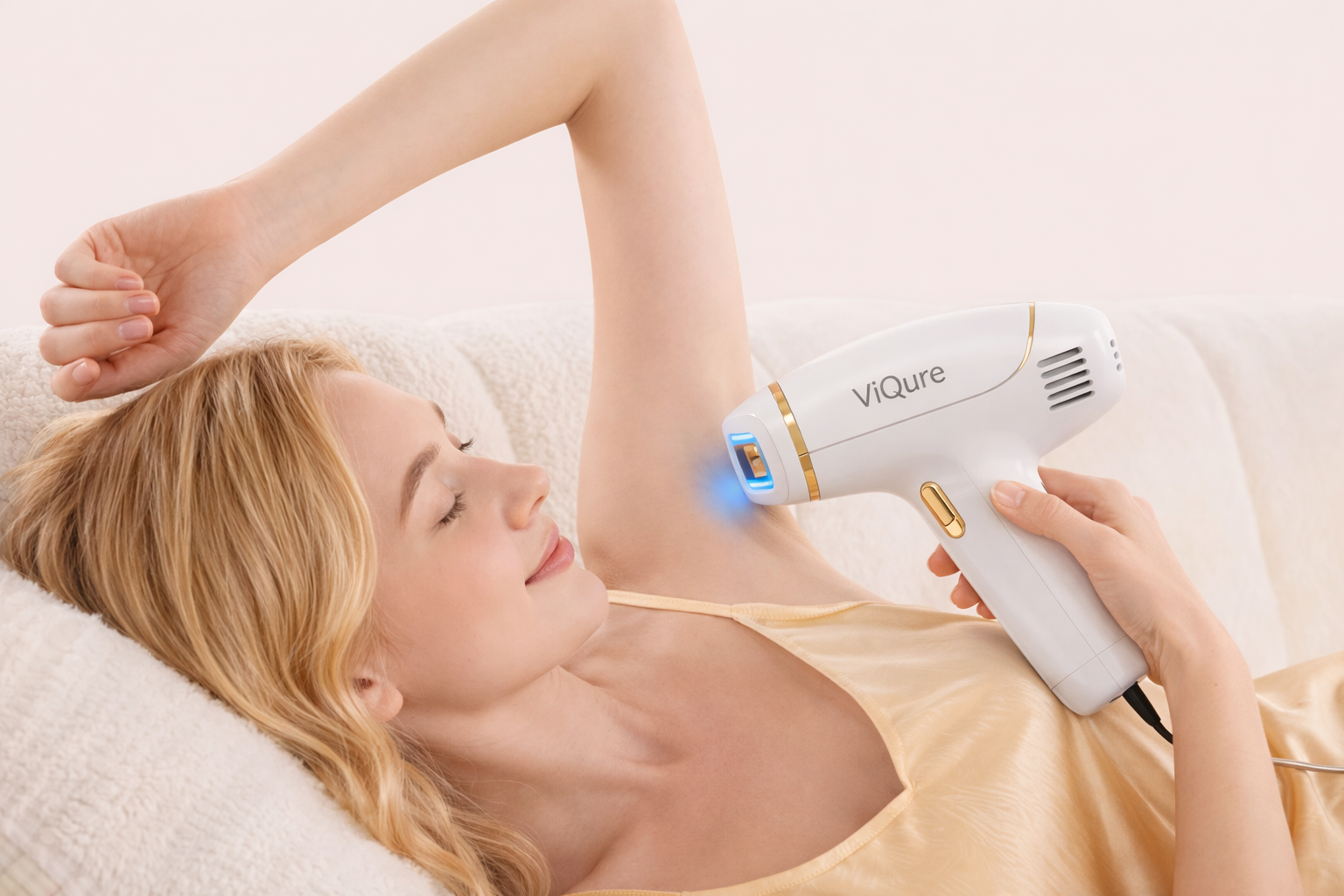
Unwanted hair always finds a way to come back. Shaving lasts a day or two, waxing hurts, and clinic treatments cost hundreds per session. Technology changed that routine. Devices like ViQure laser hair removal systems bring professional-level diode laser technology into your home.
You now have access to the same type of light-based technology used in dermatology clinics. The ViQure system uses an 808nm diode laser, designed to target the melanin in hair follicles so growth slows down over time. Research on diode laser treatments shows that consistent sessions can reduce hair regrowth by more than 70% after several treatments in many cases.
At-home devices are not magic tools, yet they offer a practical option for long-term hair reduction without frequent salon visits. Many users turn to them to manage body hair more efficiently and save money over time.
Here’s a closer look at how the device works, what it costs, and what results you can expect.
ViQure Laser Hair Removal Technology and How It Works
The core feature behind ViQure laser hair removal is its 808nm diode laser system. This wavelength is widely used in professional aesthetic clinics because it penetrates deep into the skin and focuses on melanin inside hair follicles.
The process follows a principle called selective photothermolysis. Light energy travels through the skin and converts into heat inside the follicle. That heat weakens the follicle so hair growth slows down over time.
Key technical highlights include:
| Feature | Details |
| Laser wavelength | 808nm diode laser |
| Power output | 150W–200W |
| Energy density | 23–30 J/cm² |
| Pulse frequency | 1–6 Hz |
| Spot size | 12 × 14 mm treatment window |
Compared with many IPL devices, diode lasers deliver more targeted energy. Some studies report 70–80% long-term hair reduction after multiple sessions using diode laser technology.
This technology works best on dark hair because melanin absorbs laser energy efficiently.
ViQure Hair Removal Device Models and Pricing
The brand offers two main devices designed for home use.
ViQure EpiPro 808nm Diode Laser
This model focuses on professional-level hair removal performance.
Pricing (official website):
| Price Type | Cost |
| Retail price | $1,399 |
| Typical sale price | $1,149 |
| Promotional deals | Around $965 |
The higher price reflects the stronger diode laser technology and higher energy output compared with typical IPL devices.
ViQure S-LD LED Hair Removal Device
This option uses near-infrared LED technology rather than a diode laser.
Pricing:
| Price Type | Cost |
| Retail price | $899 |
| Typical sale price | $699 |
This model offers a gentler experience and longer flash lifespan.
Both devices usually include:
- Protective goggles
- Power adapter
- Treatment handle
- User manual
- Cooling system integration
Most retailers provide free international shipping, a 1-year warranty, and a 60-day money-back guarantee.
Key Features That Make the ViQure Device Different
Several design elements improve comfort and usability during treatments.
Advanced Cooling System
The device includes a TEC thermoelectric cooling system with a sapphire tip. Cooling keeps the skin surface between 0–5°C, which reduces heat discomfort during treatment.
Large Treatment Window
The 12 × 14 mm spot size allows faster coverage for large areas like legs or back.
Adjustable Intensity Levels
Five power settings help you adapt treatments to different body areas and sensitivity levels.
Safety Contact Sensor
The laser activates only when the device touches the skin properly. This prevents accidental flashes.
These design choices help reduce common issues associated with home laser devices.
Treatment Areas You Can Use It On
You can use the device across multiple body areas.
Common treatment zones include:
- Upper lip
- Chin
- Underarms
- Arms
- Legs
- Bikini line
- Chest
- Back
- Abdomen
Many users focus on underarms and legs first because these areas show results quickly due to thicker hair follicles.
Large spot size and adjustable intensity levels help adapt treatments for both small and large areas.
Typical Treatment Timeline and Results
Laser hair removal works gradually because hair grows in cycles. The laser targets follicles during their active growth phase.
A common schedule looks like this:
| Stage | Timeline | What You Notice |
| Early phase | Every 4 weeks | Slower regrowth begins |
| Mid phase | After 2–3 sessions | Hair grows thinner |
| Main results | 4–6 sessions | Visible reduction |
| Maintenance | Every 6–12 months | Keeps skin smooth |
Some brands claim up to 98% hair reduction after 4–6 treatments, although real-world results vary depending on hair color and consistency of use.
Patience plays a big role. Hair removal devices require routine treatments over several months.
Skin and Hair Types That Work Best
Laser technology targets pigment inside hair follicles. This means results depend heavily on hair and skin contrast.
Best combinations include:
- Dark brown or black hair
- Light to medium skin tones
Challenges may occur with:
- Blonde hair
- Red hair
- Gray hair
These hair colors contain less melanin, which limits laser absorption.
Dermatology experts often note that diode lasers remain among the most effective hair removal technologies because they penetrate deeper into follicles than many alternatives.
Strengths and Limitations You Should Know
No hair removal device solves every situation perfectly.
Here is a balanced look at the advantages and limitations.
Advantages
- Uses real diode laser technology instead of IPL
- Strong energy output for deeper follicle targeting
- Cooling system improves comfort
- Large treatment window speeds up sessions
- Long device lifespan (millions of shots)
Limitations
- Higher upfront cost than entry-level IPL devices
- Several sessions required for full results
- Less effective on light hair colors
- Larger device size requires storage space
These factors are common for most professional-style home laser devices.
Is the Investment Worth It?
Clinic laser sessions often cost hundreds of dollars per treatment, depending on the body area. Many people need six or more sessions to see long-term results.
A home system like ViQure shifts that cost structure. The upfront price is higher than waxing kits or razors, yet the long-term expense may drop significantly if you plan consistent use.
Users who treat multiple body areas usually see the most value.
Before starting treatments, dermatology experts recommend checking skin sensitivity and reading safety guidelines carefully.
Final Thoughts
Home beauty technology continues to improve quickly, and ViQure laser hair removal devices show how clinic-grade technology can move into everyday routines.
The diode laser system offers strong follicle targeting, integrated cooling, and large treatment coverage. Those features help deliver steady hair reduction when you follow a consistent schedule.
The device still requires patience and commitment. Hair grows in cycles, so gradual improvement is part of the process.
If you want to explore long-term hair reduction without frequent salon visits, this device may fit your routine.
Before purchasing, review the specifications carefully and check compatibility with your hair and skin type.
Leave a Reply